
Author Archives: Fluid Labs

Waterproofing and Protection

How Much Does Microcement Cost in the UK in 2026?

Microcement is an increasingly popular choice for homeowners and interior designers looking to create seamless, contemporary surfaces. From bathrooms and wet rooms to kitchen floors and feature walls, its versatility makes it suitable for a wide range of projects.

However, one of the most common questions when considering microcement is how much it costs.

In this guide, we explore typical microcement installation prices in 2026, what affects the cost and what you should consider when comparing quotations.

How Much Does Microcement Cost Per m² in the UK?

Microcement is usually priced per square metre, but costs can vary significantly depending on whether you’re purchasing materials for DIY application or paying for professional installation.

As a general guide, the following prices can help you understand the differences:
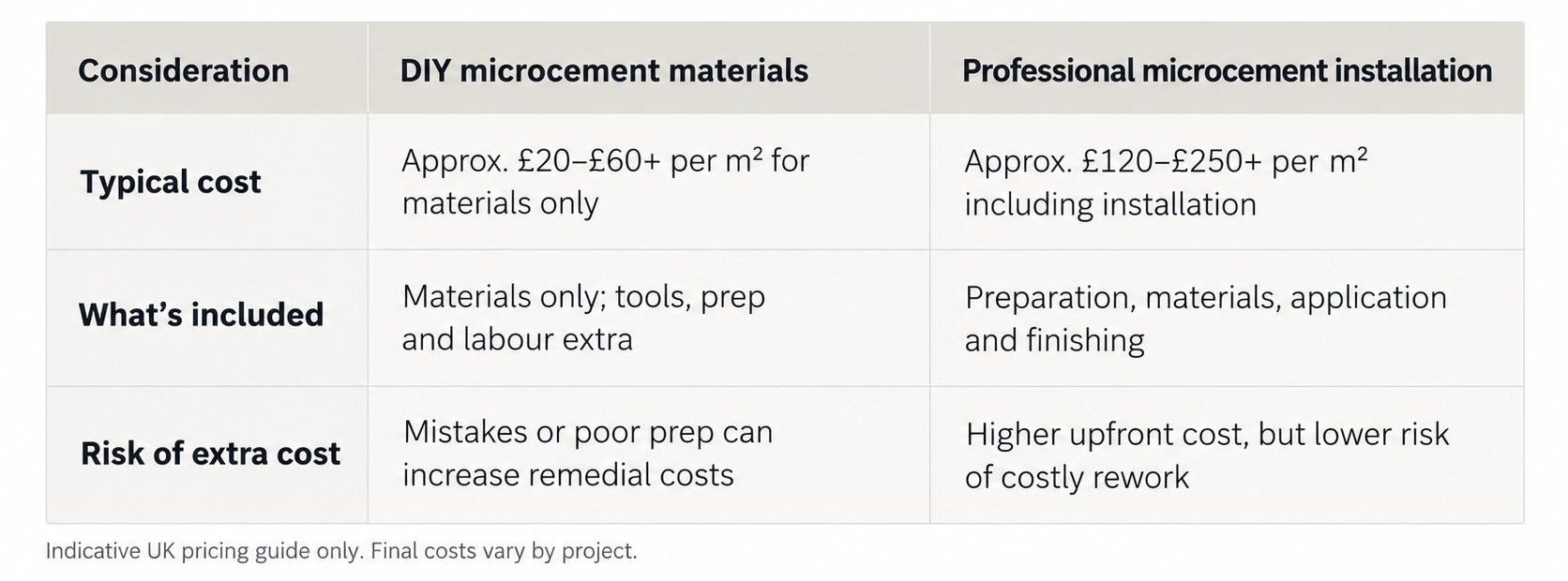
How Much Does Microcement Cost

Professional microcement installation in the UK typically costs around £120–£250+ per m², although the final price depends on the size of the area, condition of the existing surface, materials used and complexity of the installation.

The cost of professional installation includes more than the microcement itself. Surface preparation, specialist materials, multiple application stages and finishing work all contribute to the final price.

It’s also important to understand that smaller installations often cost more per square metre than larger projects. This is because preparation, equipment and application stages are still required, even when the area being covered is relatively small.

How Does Lime & Marble Price Microcement Installation?

At Lime & Marble, our professional microcement installations start from £5,000 + VAT. This typically covers an area of up to 20m², roughly equivalent to the walls and floors of a small bathroom.

For larger projects exceeding 20m², additional surface area is generally charged at £150 per m² + VAT. Our pricing reflects the specialist knowledge, careful preparation and skilled craftsmanship involved in every installation. Each project is assessed individually to ensure the right approach, materials and finishing techniques are used to create a high-quality, bespoke surface designed for lasting performance.

How Does Lime & Marble Price Microcement Installation

What Affects the Cost of Microcement Installation?

Several factors influence the price of microcement installation, including the size of the area, how the space will be used and the condition of the existing surfaces. Understanding these can help you establish a realistic budget and explain why installation quotations may vary.

Size and Shape of the Area

The total surface area is one of the biggest factors affecting microcement installation costs, but the shape and complexity of the space are also important.

For example:

  • Large, open areas: Rectangular floors and uninterrupted surfaces are generally more straightforward to work on, potentially reducing the installation cost per square metre.
  • Small or complex spaces: Bathrooms with numerous corners, fixtures, recessed shower niches or intricate edges can require more detailed application work, increasing the cost relative to their size.

Larger projects may also have a lower effective cost per square metre because some preparation and set-up costs are spread across a greater area. As a result, a large living room floor may cost less per square metre to install than a smaller bathroom with multiple surfaces and detailed features.

Room Type and Intended Use

Different rooms have different requirements, which can affect the materials, preparation and protective finishes needed.

For example:

  • Bathrooms and wet rooms: Require suitable waterproofing details, careful preparation and finishes designed for regular water exposure.
  • Floors: Need a system suitable for the expected level of foot traffic and everyday wear.
  • Feature walls: May require less extensive protection than floors or wet areas, depending on the surface condition and location.
  • Kitchens: Require finishes suitable for everyday cleaning, spills and the demands of a working kitchen.

As a result, a straightforward feature wall may cost less to install than a similarly sized shower area, where additional preparation, waterproofing details and specialist finishing may be required.

The appropriate microcement system should always be chosen according to where and how it will be used. Explore our Microcement page to learn more about its different applications.

Existing Surface Condition

The condition of the existing surface can significantly influence installation costs because microcement requires a stable, properly prepared foundation.

Before installation, the surface must be assessed to determine whether any repairs or additional preparation are needed. For example:

  • Surfaces in good condition: Stable, level surfaces or firmly bonded existing tiles may require less preparation, helping keep installation costs down.
  • Damaged or uneven surfaces: Cracks, loose tiles, significant unevenness or moisture problems may need addressing before application, increasing the time and work involved.

Microcement can often be applied over suitable existing tiles, concrete and other solid surfaces, potentially reducing removal and disposal costs.

How Much Does a Microcement Bathroom Cost?

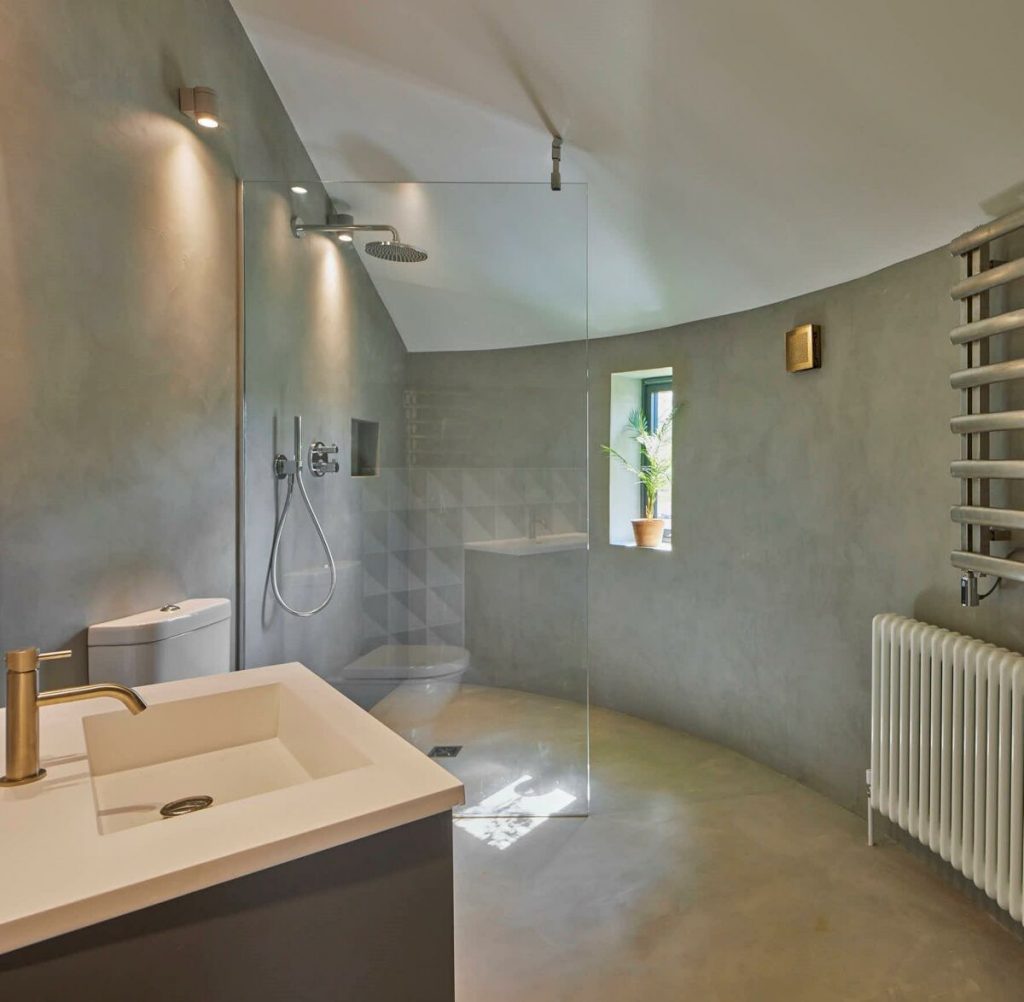
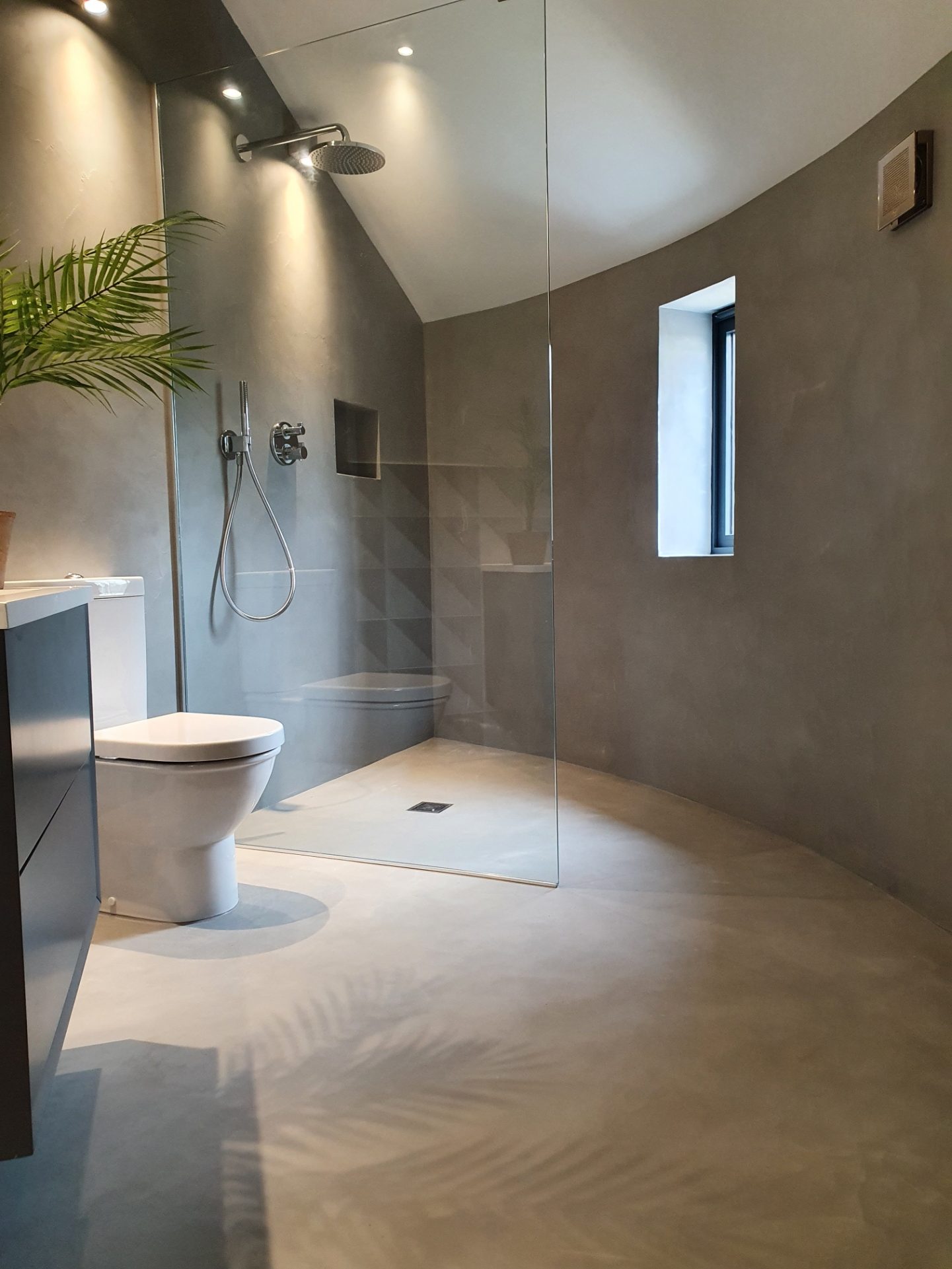
A professionally installed microcement bathroom can cost several thousand pounds, depending on which surfaces are being covered and the extent of the installation.

When budgeting for a microcement bathroom, it’s useful to consider how different applications affect the overall cost:

  • Microcement bathroom floors: The cost depends on the floor area and existing surface condition. Smaller bathroom floors can have a relatively high cost per m² because the same preparation and application stages are required.
  • Microcement showers and wet rooms: These can cost more per m² than straightforward walls due to waterproofing requirements, drainage details and the additional care needed around niches, corners and fittings.
  • Full microcement bathrooms: Covering the walls, floors and shower area involves a greater initial investment, although larger projects may have a lower effective cost per m² than smaller, standalone installations.

It’s also worth distinguishing between the cost of the microcement itself and a complete bathroom renovation. Removing existing fixtures, plumbing alterations and new sanitaryware are generally separate expenses that should be factored into your overall budget.

For more information about the different bathroom applications and finishes, explore our Microcement Bathrooms guide.
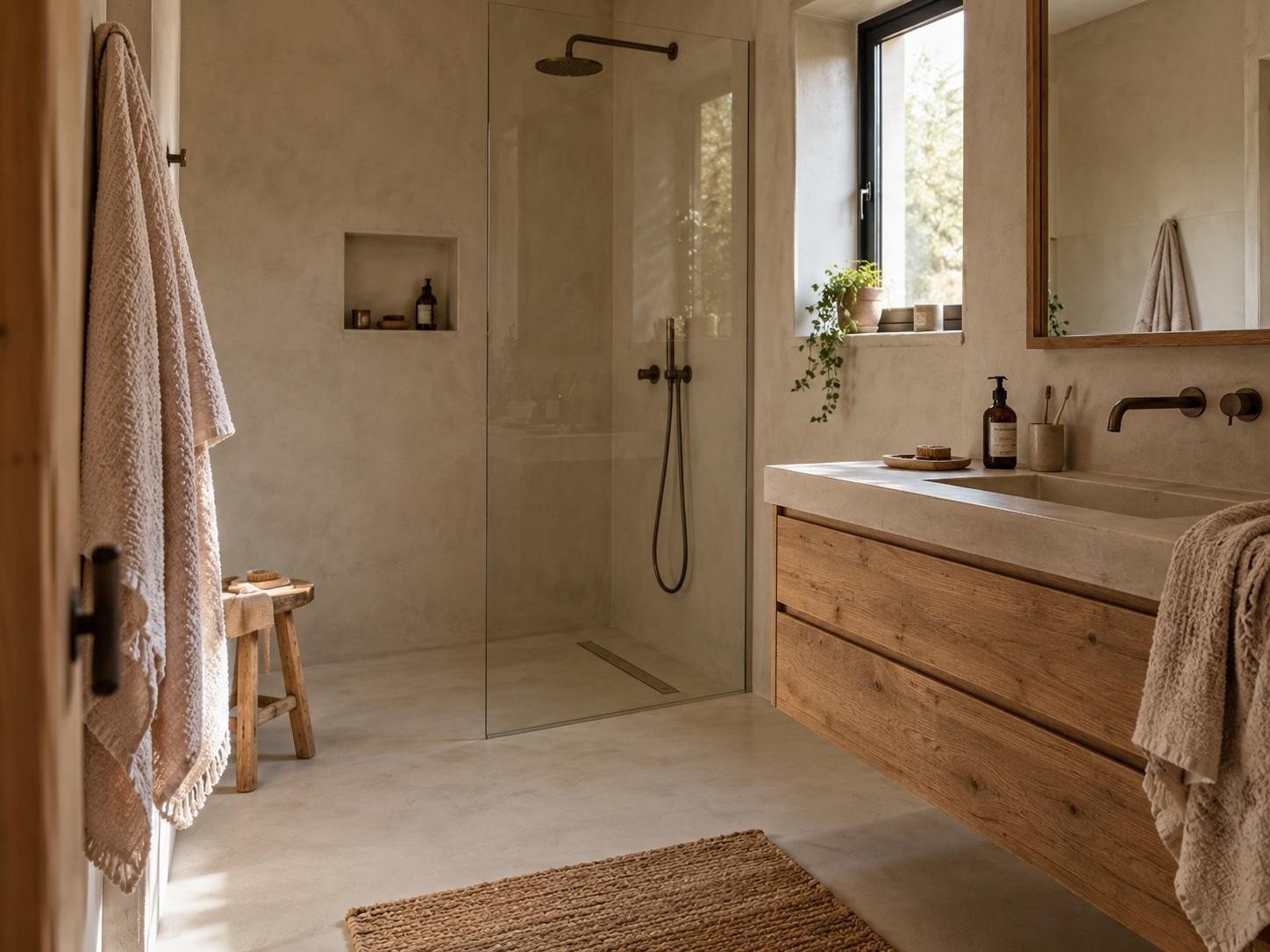
Microcement Bathrooms guide.

Is Microcement Cheaper Than Tiles?

Microcement isn’t necessarily cheaper than tiling. Budget ceramic tiles will generally cost less than microcement, while premium porcelain, natural stone and more complex tiling installations may be comparable in price.

When comparing the two, consider the total installed cost, including materials, surface preparation and labour including specialist installation, rather than just the price per square metre.

For a more detailed comparison of costs, appearance and practical suitability for bathrooms, read our Microcement vs Tiles guide.

What Are You Paying for With Professional Microcement Installation?

Professional microcement installation involves more than the cost of the material itself. The price also reflects the specialist preparation, multi-stage application and skilled workmanship required to create a durable, high-quality finish.

Understanding what’s involved helps explain why professional installation costs can vary and what you’re paying for beyond the finished appearance.

Surface Preparation

Microcement requires a stable, properly prepared surface to achieve good adhesion and a lasting finish.

Before installation, the existing surface is assessed for issues such as cracks, uneven areas, loose tiles or moisture. Depending on its condition, preparation may involve repairs, levelling or applying specialist primers.

Correct preparation helps reduce the risk of cracking, poor adhesion and other problems that could affect the appearance and performance of the finished microcement.

Specialist Application and Finishing

Unlike tiles or other manufactured finishes, microcement is applied by hand in multiple layers, with each stage requiring careful application and appropriate drying or curing time.

The installer’s technique influences the final colour, texture and consistency of the surface, particularly across larger areas or around intricate details such as corners, edges and recessed features.

Skilled application is essential to achieving microcement’s seamless appearance, creating a cohesive finish across walls, floors and architectural features without conventional grout lines.

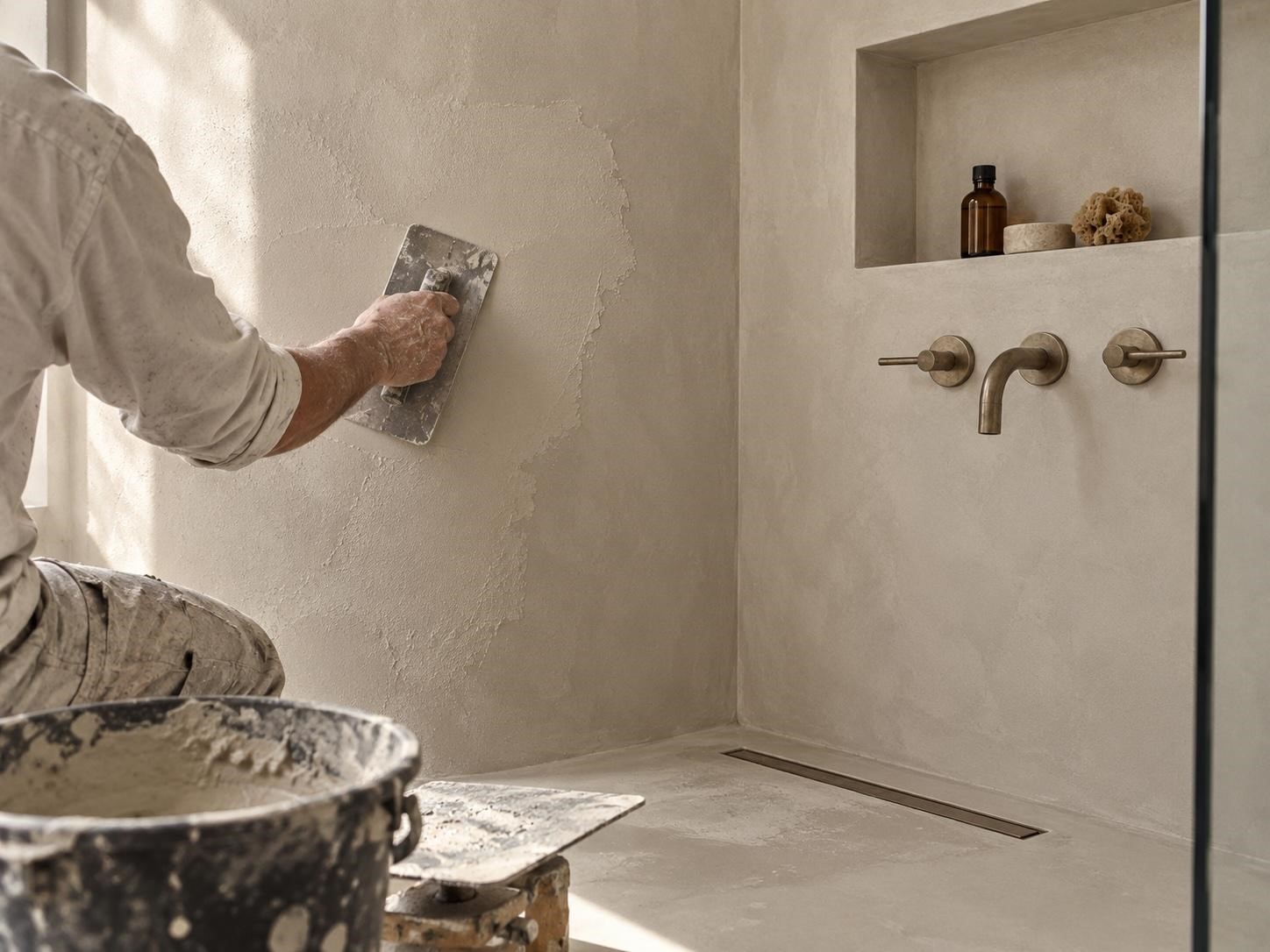
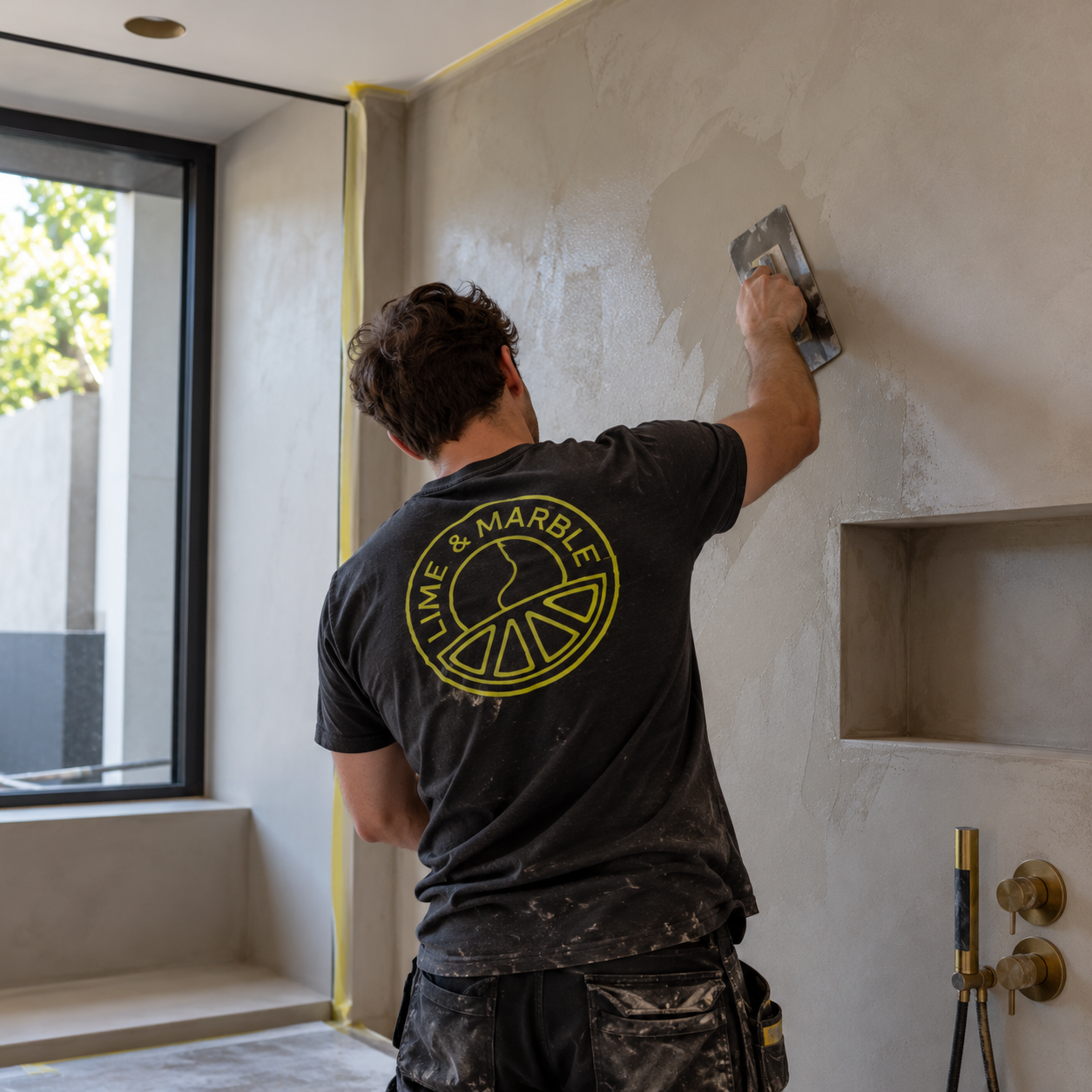
Waterproofing and Protection

Waterproofing is particularly important in bathrooms, showers and wet rooms, where surfaces are regularly exposed to moisture.

Not all microcement systems provide the same level of water protection. Some rely on surface sealers for waterproofing, whereas others incorporate waterproof properties into the material itself.

At Lime & Marble, we use Forcrete microcement, a specialist system designed to be 100% waterproof before protective sealers are applied. This means waterproofing is built into the microcement layers, while sealers provide additional protection against staining and everyday wear.

Combined with correct surface preparation and detailing around joints, drainage and fittings, this helps create a durable, reliable finish suited to wet environments.
Waterproofing and Protection

What Should You Look for When Comparing Microcement Installation Quotes?

Microcement installation quotations can vary considerably, but the cheapest price doesn’t always represent the same work or specification.

Before comparing costs, it’s important to establish exactly what’s included.

Consider the following questions:

  • Is surface preparation included? Check whether repairs, levelling or preparation of existing tiles are covered.
  • Which microcement system will be used? Different materials have different properties, so the proposed system should be suitable for the intended surface.
  • Does the price include waterproofing and sealing? This is particularly important for bathrooms, showers and wet rooms.
  • Are complex areas included? Niches, stairs, curved surfaces and detailed edges may require additional work.
  • What experience does the installer have? Previous examples of similar projects can help demonstrate their ability to achieve your desired finish.

A detailed quotation should make it clear what work is involved, which areas are being covered and what preparation or additional work may be required.

This makes it easier to compare installers fairly and avoid unexpected costs once the project begins.

Planning a Microcement Project?

Understanding the costs involved is an important part of planning a microcement installation. From the condition of the existing surfaces to the finish you want to achieve, each element contributes to the overall project requirements.

At Lime & Marble, we specialise in bespoke microcement finishes for residential and commercial interiors, combining traditional craftsmanship with contemporary materials and application techniques.
DIY Microcement Kits vs Professional Installation

DIY Microcement Kits vs Professional Installation: Which Is Better?

Microcement is a specialist, hand-applied finish known for its seamless appearance, natural movement and versatility across different surfaces. With DIY microcement kits becoming increasingly accessible, homeowners have more options when considering how to achieve this finish.

While DIY kits offer a more accessible starting point, professional installation involves specialist knowledge and techniques that can influence the appearance, durability and long-term performance of the finished surface.

The right approach depends on the size and complexity of the project, where the microcement will be applied and the result you want to achieve.

At Lime & Marble, we specialise in microcement installations across residential and commercial interiors. In this guide, we explore the differences between DIY kits and professional installation, including application, preparation, finish quality and costs.

DIY Microcement vs Professional Installation: What’s the Difference?

The main difference between DIY microcement kits and professional installation lies in the level of expertise involved, which can influence both the appearance and long-term performance of the finished surface.

DIY kits typically provide the materials and instructions needed to apply microcement, although their contents and suitability vary between manufacturers.

Professional installation takes a more tailored approach, considering the condition of the existing surface, the most appropriate materials and the techniques needed to achieve the desired finish.

These differences become particularly important for larger or more complex projects, where consistency, durability and the quality of the finished surface are priorities.

Can You Apply Microcement Yourself?

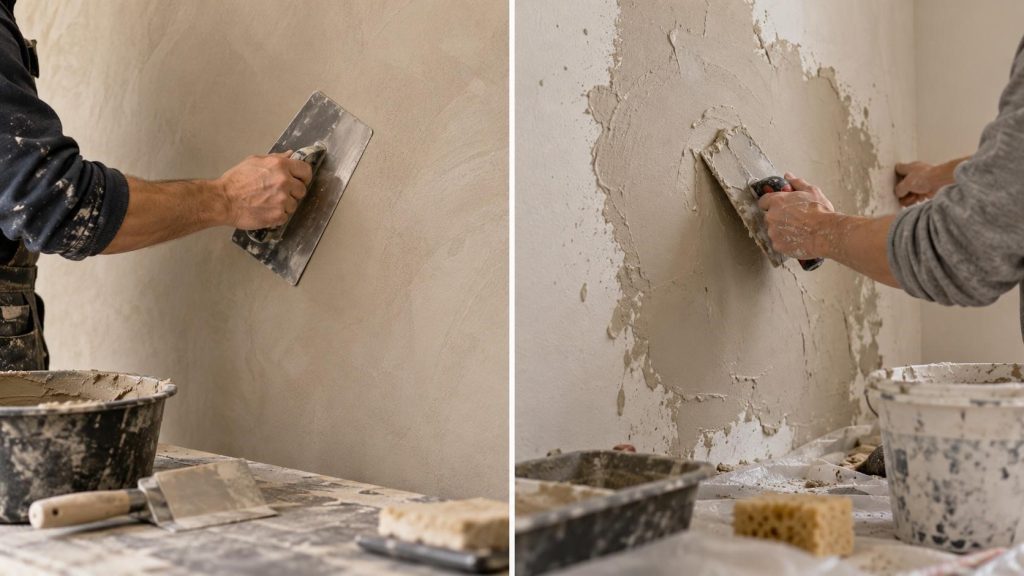
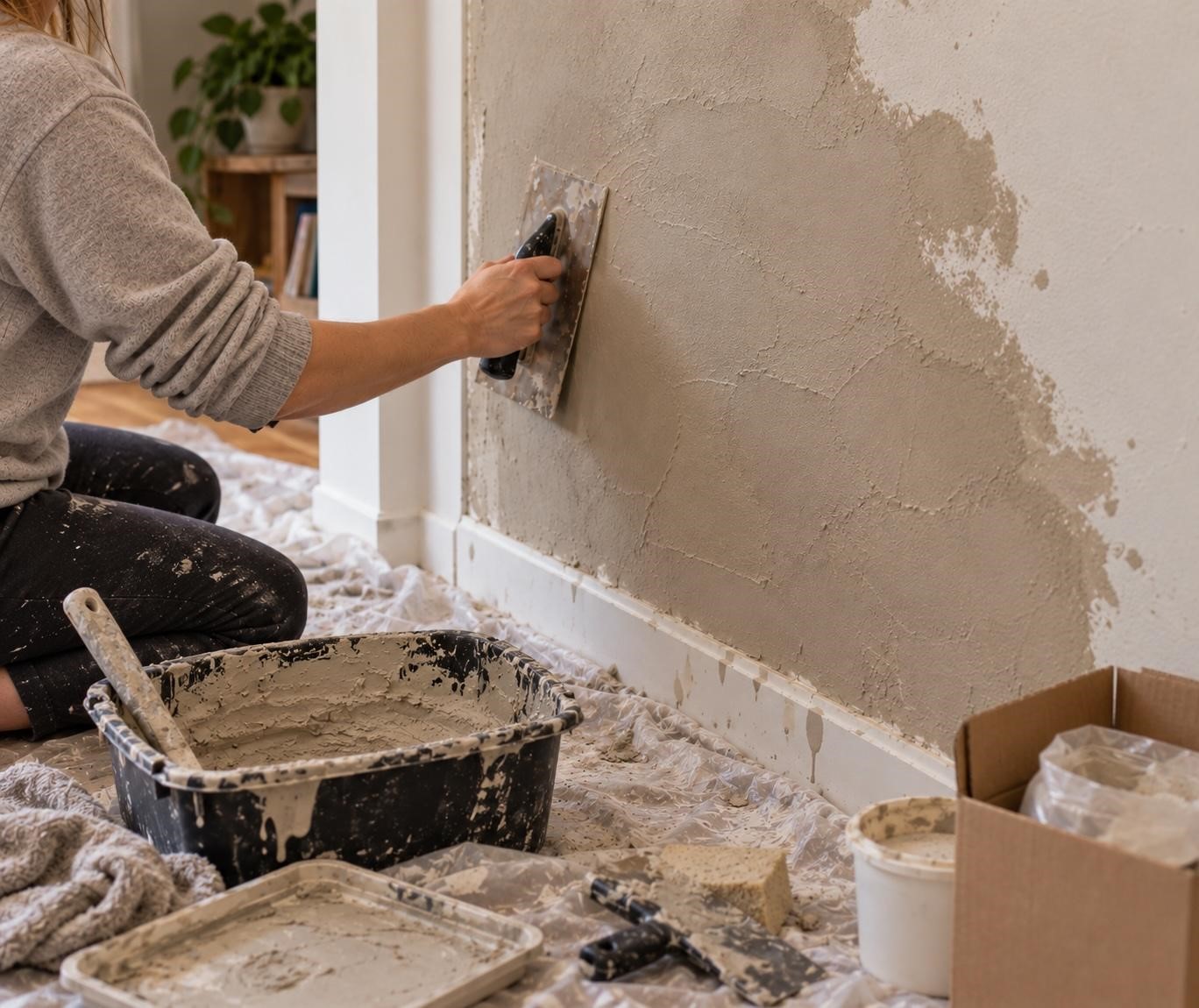
Yes. Microcement can be applied using suitable DIY kits, although achieving a professional-quality finish requires practice and attention to detail.

Depending on the system, application typically involves:

  • preparing and priming the existing surface
  • mixing and applying multiple thin layers
  • sanding between application stages
  • applying protective finishes or sealers

Each stage influences the next, meaning mistakes during preparation or application can affect the completed surface.

Microcement is also different from paint or other conventional decorative coatings. Because it creates a continuous finish, uneven application, unwanted trowel marks or inconsistencies in texture can be difficult to disguise. 

Correcting these issues may require additional sanding, preparation or reapplication rather than simply touching up one small area.

For a small decorative feature, this may be manageable. Across an entire floor, wall or bathroom, the time, materials and disruption involved in correcting an unsatisfactory finish can be considerably greater.

Can You Apply Microcement Yourself

Why Is Surface Preparation Important for Microcement?

Microcement is applied in thin layers, meaning the condition of the underlying surface can significantly affect the finished result.

Loose tiles, cracks, movement and moisture problems may cause issues with adhesion or cracking if they are not addressed before application.

Different substrates also require different preparation methods. Applying microcement over existing tiles, for example, presents different requirements from working over concrete or plasterboard.

An experienced installer can assess these conditions and select suitable preparation materials and application methods, helping create a stable foundation for the finished surface.

Does Professional Microcement Look Better Than DIY?

Professional installation generally offers greater control over the colour, texture and consistency of a microcement finish, particularly across larger or more complex surfaces.

Unlike manufactured tiles or panels, much of microcement’s character comes from the application itself. Trowel movements, sanding and finishing techniques influence its depth, texture and natural tonal variation.

The challenge is creating these effects intentionally, rather than allowing inconsistencies in application to determine the final appearance.

This becomes particularly noticeable where microcement continues across multiple surfaces or needs to complement specific cabinetry, lighting and architectural details.

For homeowners, interior designers and architects, the ability to achieve a particular finish consistently can be just as important as the choice of colour.

At Lime & Marble’s Chichester showroom, you can see and feel different microcement finishes and explore how texture, movement and application techniques influence their appearance.

Are DIY Microcement Kits Suitable for Bathrooms and Showers?

Some DIY microcement kits are marketed for bathroom use, but suitability depends on the product, installation requirements and level of water exposure.

A decorative bathroom wall, for example, presents very different challenges from a shower floor exposed to water every day.

Microcement systems also vary in their waterproofing properties. Some rely on protective sealers, while others incorporate waterproofing within the coating itself.

At Lime & Marble, we install specialist Forcrete microcement systems, including resin-hybrid finishes designed to be waterproof before sealing.

However, even a waterproof coating does not replace the need for suitable substrates, drainage and correctly detailed junctions.

In showers and wet rooms, small installation errors around corners, drains or junctions can allow water to reach the underlying structure, making these areas particularly important during installation.

For these reasons, applying microcement in bathrooms and other regularly wet areas is generally better suited to experienced professionals who understand the complete installation requirements, rather than the decorative coating alone.

Are DIY Microcement Kits Suitable for Bathrooms and Showers

Is DIY Microcement Cheaper Than Professional Installation?

DIY microcement kits generally cost less because homeowners undertake the labour themselves.

However, the price of a kit and a professional installation quote do not necessarily cover the same materials or work.

Depending on the product and existing surface, a DIY project may require additional preparation materials, tools, protective equipment and finishing products.

Professional installation typically includes substrate assessment and preparation, the selection of suitable materials, application and finishing.

The potential cost of correcting mistakes is also worth considering. An uneven finish or adhesion problem may require additional preparation or reapplication, reducing the savings made initially.

For a small decorative project, DIY can be a reasonable way to keep costs down. For a larger floor, bathroom or bespoke interior, the additional investment in professional installation may be more appropriate when considering the importance of the finished result and its long-term performance.

Ultimately, it is worth comparing the complete cost of achieving the desired microcement finish, rather than simply the price of the materials.

Should You Choose a DIY Microcement Kit or Professional Installer?

DIY microcement kits can be a reasonable option for small, straightforward decorative projects where there is room to experiment.

However, for larger surfaces, bathrooms, floors and projects where the finished appearance and long-term performance are important, professional installation is generally the better choice. The right preparation, materials and application techniques can make a significant difference to the final result.

At Lime & Marble, we specialise in bespoke microcement installations for residential and commercial interiors, combining specialist materials with experienced craftsmanship to create finishes tailored to each project.

Microcement vs Tiles for Bathrooms

Microcement vs Tiles: Which Is Better for Bathrooms?

Microcement and tiles are both popular bathroom finishes, but they offer different advantages in terms of appearance, maintenance, installation and cost.

Microcement is particularly suited to bathrooms where a seamless appearance, bespoke finishes and fewer grout lines are priorities. Tiles offer greater variety in individual patterns and formats, often with a lower initial material cost.

The better option ultimately depends on the design, budget and practical requirements of the space, although microcement offers distinctive advantages for those looking to create a more continuous, cohesive interior.

At Lime & Marble, we specialise in microcement finishes for residential and commercial interiors, working with homeowners, interior designers and architects to create surfaces tailored to individual projects.

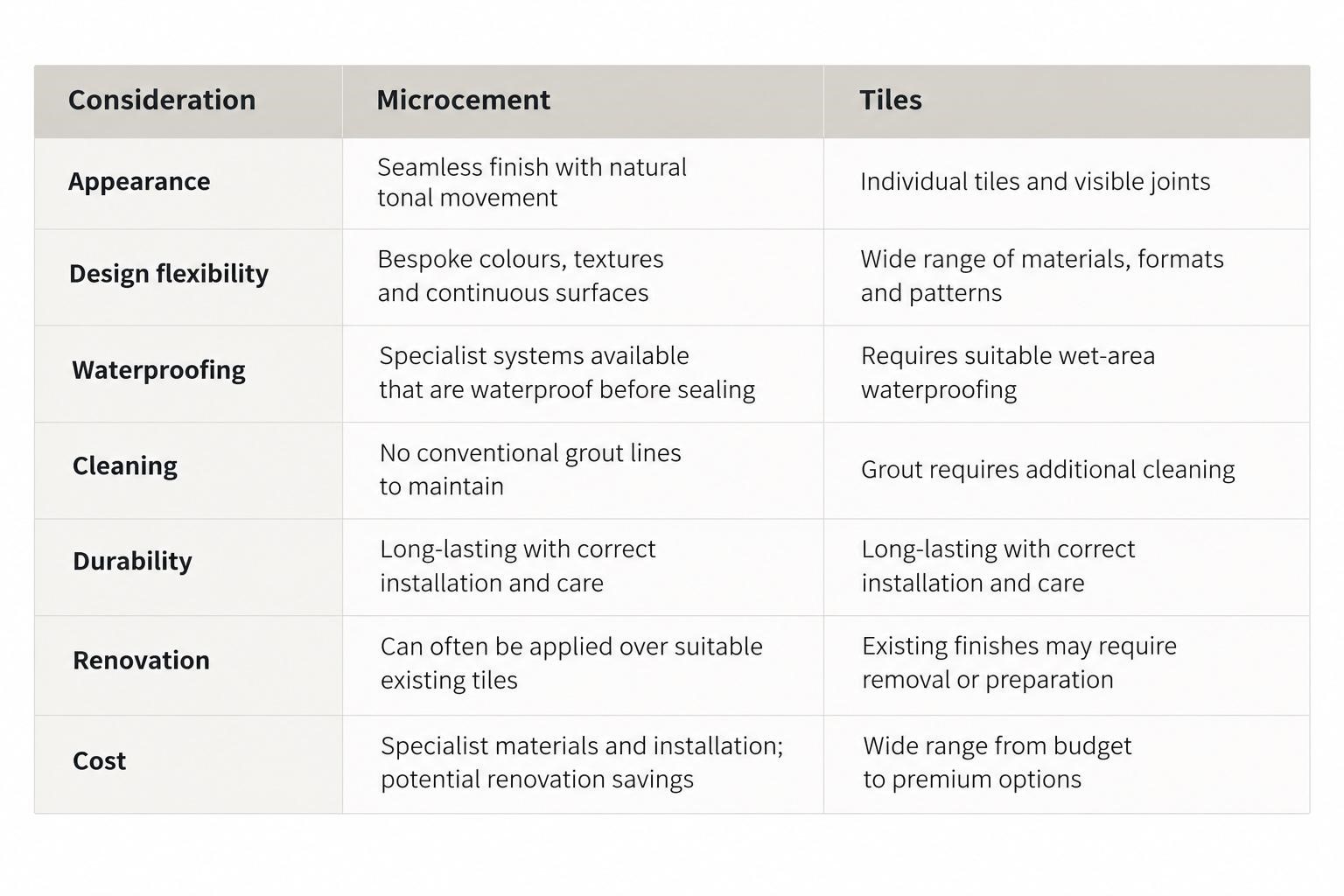
Microcement vs Tiles: What Are the Main Differences?

The main difference between microcement and tiles is how the finished surface is created.

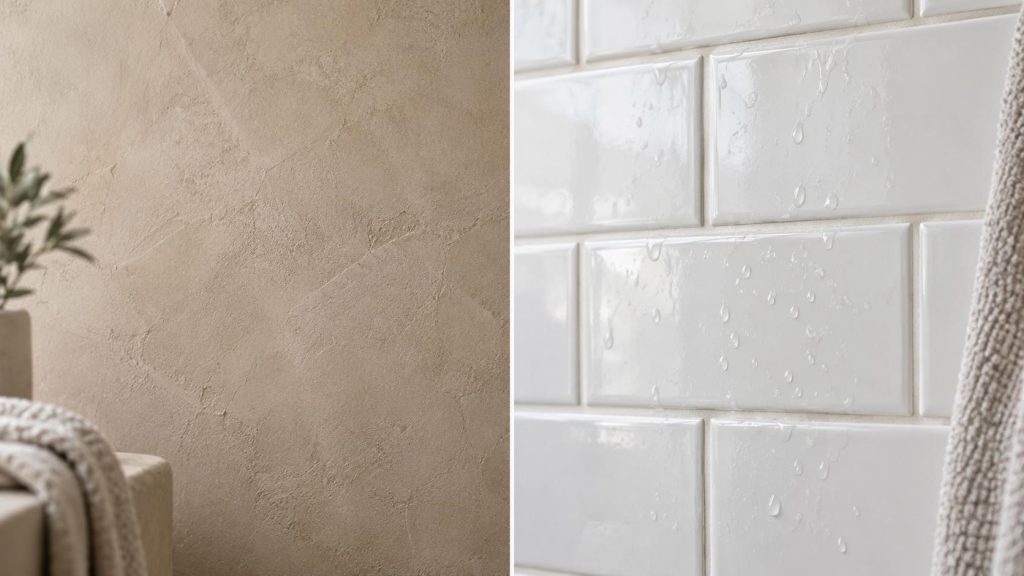
Microcement is applied by hand in thin layers, producing a continuous finish with natural tonal variation and no conventional grout lines. Tiles are individual units, typically made from ceramic, porcelain or natural stone, installed with grouted joints.

Both can create attractive, long-lasting bathrooms, but their characteristics offer different benefits.

Microcement vs Tiles

Which Offers More Design Flexibility?

Both materials offer design flexibility, although microcement provides greater freedom to create a continuous finish across different bathroom surfaces, while tiles provide variety through different patterns, materials and formats.

Unlike tiles, microcement can continue across walls, floors, shower areas and architectural features without conventional grout lines interrupting the design.

This can be particularly effective in smaller bathrooms, where uninterrupted surfaces help create a greater sense of space, or larger interiors where a consistent material palette is important.

As a hand-applied finish, microcement also offers natural tonal variation and movement, with colours and textures tailored to complement surrounding materials.

When choosing a microcement finish, colour is only part of the decision. The level of texture, movement and sheen can significantly influence how the material looks under bathroom lighting and alongside cabinetry, sanitaryware and other finishes.

Tiles provide considerable decorative variety through different formats, patterns and materials, but their individual shapes and joints remain part of the finished appearance.

For those looking to create a more seamless, understated bathroom, microcement offers a level of visual continuity that conventional tiling cannot fully replicate.

Is Microcement More Waterproof Than Tiles?

Both microcement and tiles can be suitable for bathrooms, showers and wet rooms, although waterproofing performance depends on the complete installation rather than the decorative finish alone.

Porcelain tiles generally absorb very little water, but grout joints and the tiled finish itself should not be relied upon to waterproof a shower. Appropriate waterproofing beneath the tiles and careful detailing around drains and junctions remain essential.

Microcement systems vary, with some relying on protective sealers for waterproofing.

At Lime & Marble, we install specialist Forcrete microcement systems, including resin-hybrid finishes designed to be waterproof before sealing.

This means the coating itself provides waterproofing, while the sealer offers additional protection against staining and everyday wear.

However, the complete shower or wet-room construction must still incorporate suitable substrates, drainage and waterproof detailing where required.

With an appropriately specified system, microcement combines a continuous decorative finish with waterproofing performance suitable for demanding bathroom environments.

Which Is Easier to Clean and Maintain?

Microcement can be easier to clean than traditional bathroom tiles because it has no conventional grout lines where dirt, soap residue, limescale and mold can commonly accumulate.

In tiled bathrooms, grout joints can require additional cleaning and maintenance, particularly around showers and other frequently wet areas.

Microcement creates a continuous surface without these conventional joints, making routine cleaning more straightforward.

A soft cloth or mop with water and a suitable pH-neutral cleaner is generally recommended for everyday care. However, cleaning products must be compatible with the installed system, as harsh chemicals or abrasive materials may damage certain protective finishes.

Tiles can also be easy to clean, particularly smooth glazed porcelain, but maintaining grout remains an additional consideration.

For bathrooms where ease of cleaning and fewer visible joints are priorities, microcement offers a meaningful practical benefit alongside its seamless appearance.

Which Is Easier to Clean and Maintain

Which Is More Durable: Microcement or Tiles?

Both microcement and tiles can provide durable, long-lasting bathroom surfaces when correctly installed and maintained.

Professionally installed microcement can last for decades, with its performance depending on the system used, substrate preparation and ongoing care.

Because microcement creates a continuous finish, the stability of the underlying surface is particularly important. Any existing movement or cracks must be addressed before application to help prevent problems developing in the finished surface.

Porcelain tiles are also highly resistant to everyday wear, although individual tiles can chip or crack following impact or movement beneath the surface. Grout joints may also require attention over time.

Repairs differ between the materials. Individual tiles can sometimes be replaced, while localised repairs to microcement may be more noticeable due to its hand-applied texture and tonal variation.

Neither finish is immune to damage, but a correctly specified microcement system can provide a long-lasting bathroom surface without conventional grout lines.

Is Microcement Cheaper Than Tiles?

Microcement is not necessarily cheaper than tiles, although comparing material prices alone does not reflect the total cost of a bathroom renovation.

Basic ceramic tiles are often a more affordable starting point, while premium porcelain, natural stone and intricate tile layouts can involve substantially higher material and installation costs.

Microcement is a specialist hand-applied finish, with costs reflecting surface preparation, multiple application stages and skilled installation.

However, microcement can often be applied over suitable existing tiles, potentially reducing the need for removal, disposal and associated renovation work.

The existing surface must be stable and correctly prepared, with any cracks, movement or moisture problems addressed beforehand.

Where suitable existing finishes can be retained, microcement may offer better overall value than initially expected.

The most useful comparison is therefore the total cost of each completed installation, rather than the price of the materials alone.

Which Is Better for Your Bathroom: Microcement or Tiles?

Both microcement and tiles can create attractive, durable bathroom finishes. Tiles offer extensive choice in materials, patterns and price points, while microcement provides a seamless, bespoke finish with fewer grout lines to maintain.

For those prioritising design flexibility, visual continuity and ease of maintenance, microcement can offer distinct advantages, particularly when creating a cohesive finish across bathroom walls, floors and showers.

At Lime & Marble, we specialise in creating bespoke microcement finishes tailored to individual projects. Visit our Chichester showroom to explore colours, textures and finishes, or contact our team to discuss your bathroom project.

Microcement Bathrooms

Microcement Bathrooms: Everything You Need to Know

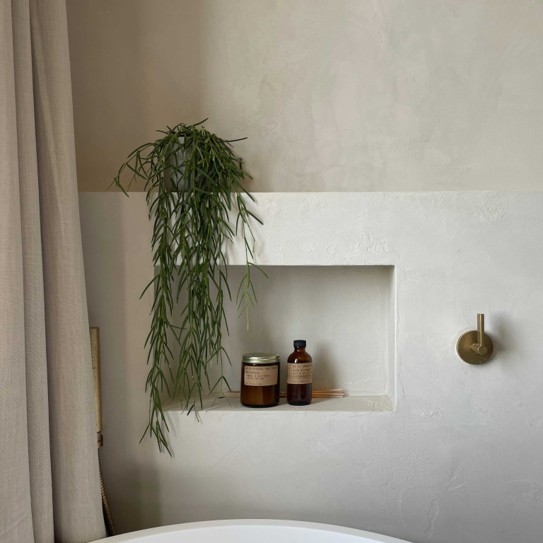
Microcement is an increasingly popular choice for bathrooms, offering a seamless finish across floors, walls, showers and wet rooms without the conventional grout lines associated with tiles.

With a wide range of colours, textures and finishes available, microcement can complement everything from minimalist modern bathrooms to warmer, more natural interiors.

However, choosing microcement involves more than just considerations about appearance. Waterproofing, surface preparation and the system used all influence how the finish performs over time.

At Lime & Marble, we specialise in microcement installations across residential and commercial interiors, working with homeowners, interior designers and architects to create finishes tailored to each project.

In this guide, we explore everything you need to know about microcement bathrooms, including applications, waterproofing, design options, costs, cleaning and longevity.

Where Can Microcement Be Used in a Bathroom?

Microcement can be used across a variety of bathroom surfaces, including:

  • bathroom floors and walls
  • showers and walk-in showers
  • wet rooms
  • vanity units and worktops
  • bath surrounds and architectural features
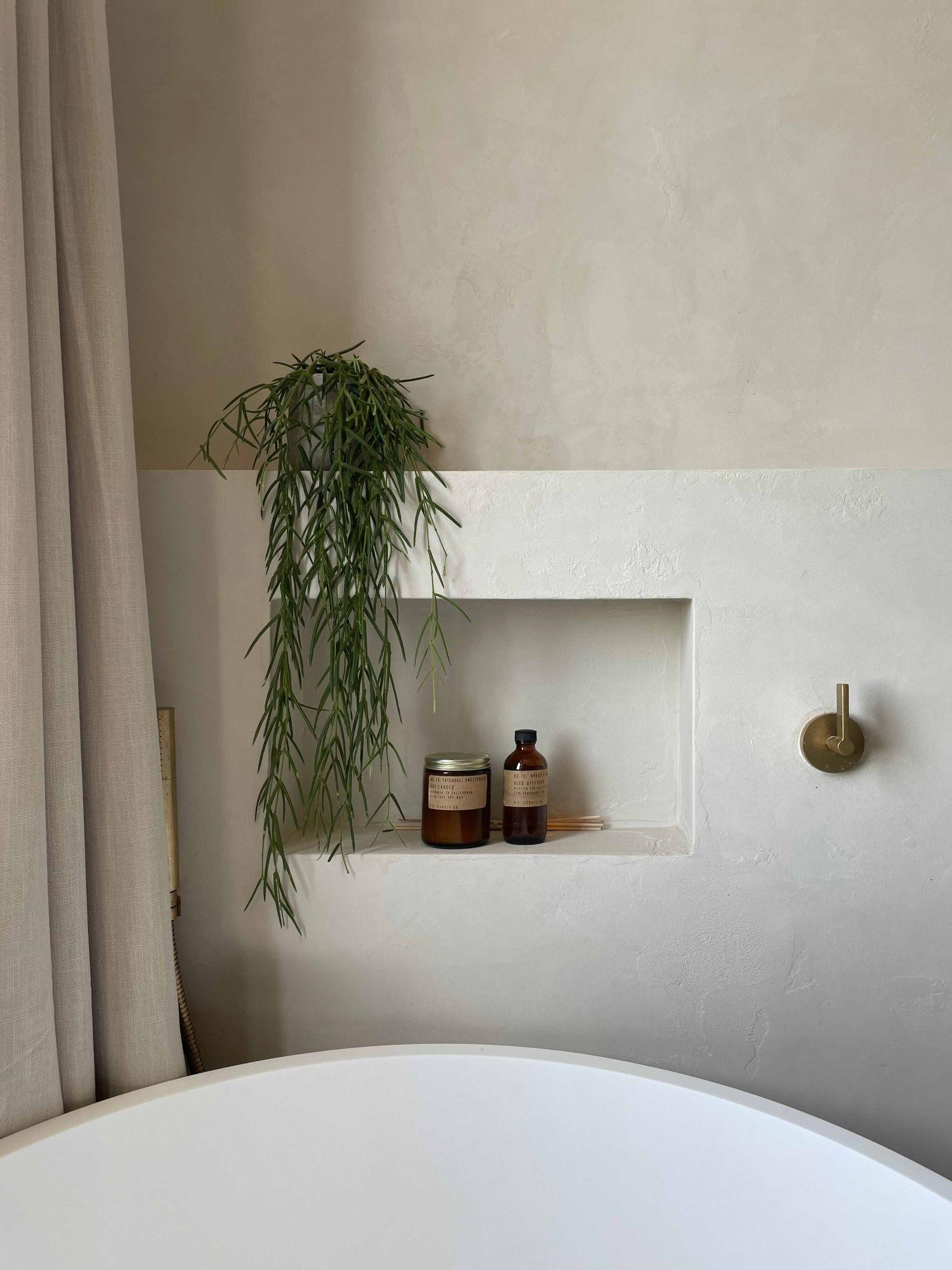
Where Can Microcement Be Used in a Bathroom

Microcement Bathroom Floors and Walls

Microcement can create a continuous finish across bathroom floors and walls, making it particularly effective for creating a cohesive interior.

In smaller bathrooms, uninterrupted surfaces can help create a greater sense of space, while larger bathrooms can benefit from carrying the same colour and texture throughout.

For bathroom floors, different surface textures can be specified to suit the intended use. In areas exposed to water, slip resistance is particularly important, and the chosen system and finish should provide suitable performance for the space.

Microcement Showers and Wet Rooms

Microcement is suitable for showers and wet rooms when a system specifically designed for wet areas is used.

It is particularly suited to walk-in showers, where the finish can continue across walls and appropriately constructed floors without the visual interruptions created by conventional tile joints.

However, the seamless appearance does not remove the need for careful construction. Shower floors must direct water towards the drain, while corners, junctions and fittings require appropriate waterproof detailing.

Is Microcement Waterproof?

Yes. Microcement can provide a waterproof finish, although this depends on the particular system used.

Some conventional microcement systems rely on protective sealers for waterproofing, meaning the condition of the sealer plays an important role in protecting the surface.

At Lime & Marble, we install specialist Forcrete microcement systems, including resin-hybrid finishes designed to be waterproof before sealing. The sealers provide additional protection against staining and everyday wear, rather than being the sole source of waterproofing.

However, a waterproof surface finish does not replace the need for appropriate substrates, drainage and underlying waterproofing where required.

This is particularly important in showers and wet rooms, where the complete installation must be designed to withstand regular water exposure.

Is Microcement Waterproof

Can Microcement Be Applied Over Existing Bathroom Tiles?

Yes. Microcement can often be applied over existing bathroom tiles, provided they are stable, correctly prepared and suitable for the intended system.

This can reduce the need to remove and dispose of existing finishes, potentially making renovation less disruptive and more cost-effective.

However, the condition of the existing tiles is important. If they are loose or the underlying surface is moving, that movement can transfer through to the microcement and cause cracking.

Existing moisture problems must also be addressed before application. In showers and wet rooms, the condition of the underlying waterproofing requires particular attention.

What Colours and Finishes Are Available for Microcement Bathrooms?

Microcement offers considerable freedom over colour, texture and finish, allowing it to complement a wide variety of bathroom designs.

Although often associated with grey concrete-inspired interiors, popular options also include:

  • warm beige, cream and sand tones
  • natural stone-inspired colours
  • earthy browns and terracotta shades
  • pale grey and off-white finishes
  • darker charcoal and contemporary tones

Different application techniques can create subtle tonal movement, greater texture or smoother, more polished effects.

Microcement can also share visual similarities with other specialist finishes, including Venetian plaster, although the materials differ in composition, applications and performance.

For homeowners and interior designers, physical samples can help determine how finishes interact with lighting, cabinetry, sanitaryware and other materials. Different colours and textures can also be explored at our Chichester showroom.

How Much Does a Microcement Bathroom Cost?

The cost of a microcement bathroom depends on the size of the area, condition of the existing surfaces, preparation required and complexity of the chosen finish.

Microcement is a specialist hand-applied system, with costs reflecting the materials, multiple application stages and skilled installation involved.

Factors influencing the overall cost include:

  • the total surface area
  • substrate condition and preparation
  • waterproofing requirements
  • the chosen colour, texture and finish
  • complexity of shower areas and architectural details

Microcement can be comparable in cost to high-quality tiling and, where suitable existing surfaces can be retained, may reduce the overall cost of renovation.

However, the most cost-effective option will depend on the individual project and the level of preparation required.

How Long Does Microcement Last in a Bathroom?

A professionally installed and properly maintained microcement bathroom can last for decades, although the actual lifespan will depend on the system, installation and conditions of use.

Because microcement creates a continuous, hand-applied finish, cracks or repairs can be more noticeable than on surfaces made from individual tiles.

This makes careful substrate preparation important. Movement in the underlying surface, for example, can cause cracks to develop in the microcement above.

In showers and wet areas, using an appropriate waterproof system and maintaining seals around fittings and junctions also contribute to long-term performance.

How Do You Clean and Maintain a Microcement Bathroom?

Microcement is relatively straightforward to clean, particularly because there are no conventional grout lines requiring regular attention.

For everyday care, a soft cloth or mop with water and a suitable pH-neutral cleaner is generally recommended.

To maintain the finish:

  • use non-abrasive cleaning materials
  • avoid harsh acidic chemicals and unsuitable cleaning products
  • remove soap residue and standing water regularly
  • check seals around fittings and sanitaryware

In hard-water areas, regular cleaning can also help prevent limescale deposits from building up. Strong acidic limescale removers should be avoided unless specifically approved for the installed system, as they may damage the protective finish.

Specific maintenance requirements will depend on the microcement system and sealer used, so the manufacturer’s and installer’s guidance should always be followed.

Is Microcement Right for Your Bathroom?

Microcement can be an excellent choice for bathrooms where a seamless finish, design flexibility and durability are priorities.

The most suitable system and finish will depend on the existing surfaces, how the bathroom will be used and the overall design you want to achieve.

At Lime & Marble, we work with homeowners, interior designers and architects to explore these considerations and find the right finish for each project.

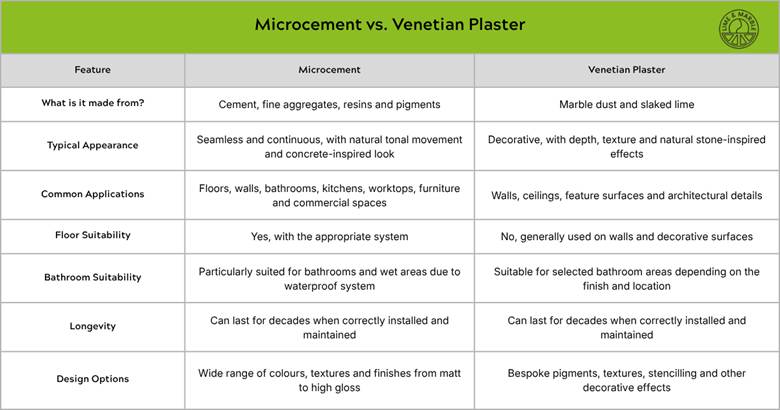
Microcement vs Venetian Plaster: What’s the Difference?

Microcement and Venetian plaster are both specialist, hand-applied finishes that can bring texture, movement and individuality to an interior. Although they share some similarities, they are made from different materials and are suited to different applications.

Microcement is typically chosen for seamless surfaces including floors, walls and wet areas, while Venetian plaster is primarily used decoratively on walls and architectural features.

Neither is inherently better than the other. The most suitable choice depends on where the finish is being used, the performance required from the surface and the overall design you want to achieve.

At Lime & Marble, we install both microcement and Venetian plaster across residential and commercial interiors, including projects for homeowners, interior designers, architects and business owners.

Is Microcement the Same as Venetian Plaster?

No. Microcement and Venetian plaster are distinct surface finishes, although both are applied by hand and offer considerable freedom over colour, texture and finish.

Microcement is a versatile, seamless finish for floors, walls, bathrooms and worktops, while Venetian plaster is primarily used on walls and architectural features to create depth, texture and decorative character.

Here is a quick comparison:

What is Microcement?

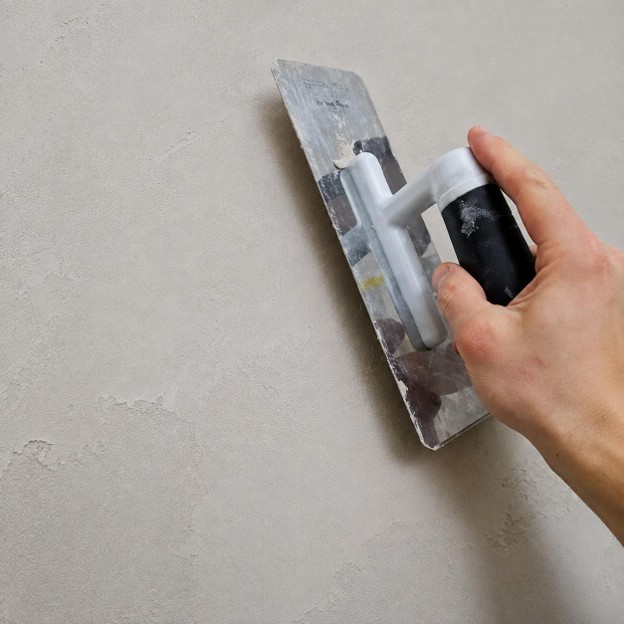
Microcement is a decorative coating made from cement, fine aggregates, resins and pigments. It is applied in thin layers by hand to create a continuous surface without conventional joints or grout lines associated with materials such as tiles.

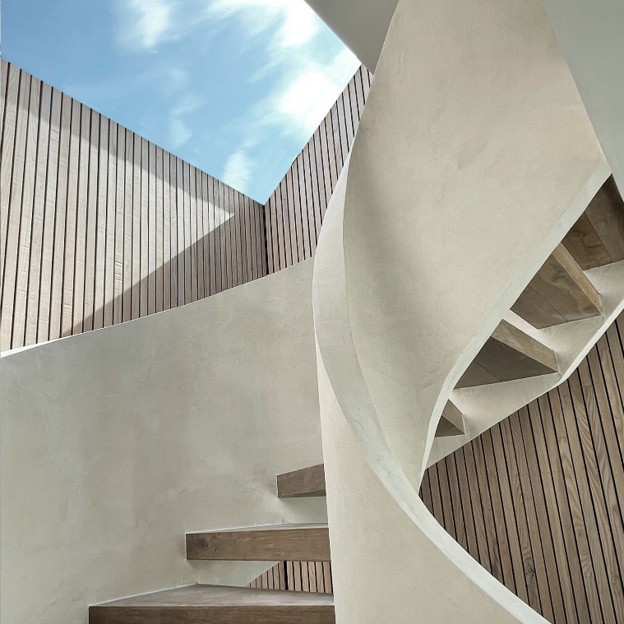
Its versatility is a major part of its appeal. Rather than being restricted to one type of surface, microcement can be used to carry the same material and colour palette across different surfaces and create a seamless flow between spaces.

There is also considerable freedom over its appearance. Although microcement is often associated with stone or concrete-inspired interiors, different colours, textures and finishes can create anything from soft, understated surfaces to more polished modern schemes.

At Lime & Marble, we can tailor the colour, texture and finish – from matt to high-gloss effects – of microcement, to suit the wider interior scheme.

Where Can Microcement Be Used?

Microcement can be used across a wide variety of residential and commercial environments, including:

  • floors and walls
  • bathrooms, showers and wet areas
  • kitchens, worktops and splashbacks
  • living spaces
  • vanity units and furniture
  • outdoor flooring
  • architectural features
  • residential and commercial interiors

Is Microcement Suitable for Showers and Is It Waterproof?

Yes. Microcement can be suitable for showers, bathrooms and other wet areas when a system designed for these conditions is specified.

The Forcrete systems we install include finishes designed for wet areas that are waterproof before sealing, helping to create seamless, grout-free bathroom surfaces.

As with any wet-area finish, the system and build-up need to be matched to the substrate, location and expected use.

What Is the Lifespan of Microcement?

A professionally installed and properly maintained microcement surface can last for decades.

Its actual lifespan will depend on factors such as the substrate, quality of installation, location, amount of traffic and ongoing care.

A decorative wall will naturally experience very different demands from a busy commercial floor, for example, which is why the correct system should always be selected for the intended application.

This is why at Lime & Marble, we assess each project individually, considering the substrate, environment and expected use before recommending the most appropriate microcement system.

Is Microcement Cheaper Than Tiling?

Microcement can be comparable in cost to high-quality tiling  and, in some projects, can make the overall renovation more cost-effective.

Microcement can often be applied over suitable existing surfaces, including tiles. Where this is possible, it can reduce the need to remove and dispose of the existing finish before work begins.

There are also no grout lines to clean or maintain once the surface is complete.

However, microcement is a specialist hand-applied system, and the overall cost reflects substrate preparation, multiple layers, specialist materials, sanding, finishing and skilled installation.

What Is Venetian Plaster?

Venetian plaster is a decorative plaster traditionally made using marble dust and slaked lime. It is applied by hand to create surfaces with depth, movement and a distinctive sense of materiality.

Different materials, pigments and application techniques can produce looks inspired by marble, travertine, limestone and other natural stone, as well as more individual textured or polished effects.

The finish can therefore be subtle and understated or much more expressive, depending on the wider interior design.

For interior designers in particular, this gives the wall itself an opportunity to become part of the material palette rather than simply providing a background colour.

At Lime & Marble, we can tailor the colour, texture and decorative detailing – including stencilling – to suit the wider interior scheme.

Where Can Venetian Plaster Be Used?

P: Venetian plaster is particularly suited to walls, ceilings, feature surfaces and architectural details. It can be applied to a variety of suitably prepared surfaces, including:

  • walls and ceilings
  • over tiles
  • cement board
  • Brick
  • wood
  • architectural features such as archways

What Is the Lifespan of Venetian Plaster Walls?

Venetian plaster is a durable, long-lasting decorative finish and can remain attractive for decades when correctly applied and cared for.

Localised areas can also often be repaired where required without necessarily having to refinish an entire room.

Is Venetian Plaster Cheaper Than Tiling?

It can be, particularly in renovation projects where a suitable existing tiled surface can be retained rather than removed.

Venetian plaster can be applied over stable, correctly prepared tiles, potentially reducing the time and costs associated with stripping out and disposing of the existing finish.

Cost will still depend on factors such as the size and condition of the surface, preparation required and the complexity of the chosen finish. A subtle textured finish, for example, has different material and labour requirements from a highly polished or intricate decorative effect.

Do Microcement and Venetian Plaster Look Similar?

Microcement and venetian plaster can share similar colours, seamless application and natural tonal variation, but the finished character of the two materials is different.

Microcement often creates a more continuous, stone or concrete-inspired surface and can carry the same visual language across walls, floors and other areas.

Venetian plaster tends to place more emphasis on the decorative character of the surface itself. Techniques can create finishes influenced by marble, travertine and limestone, or use texture and polish to create something more individual.

How Do You Choose Between Microcement and Venetian Plaster?

The best place to start is with three questions:

Where will the finish be used?

A floor, shower, worktop or busy commercial surface has different requirements from a decorative feature wall.

What does the surface need to do?

Consider water exposure, foot traffic, cleaning, durability and how the area will be used day to day.

How do you want it to look and feel?

Think about colour, texture, movement, sheen and how the finish will interact with the other materials and lighting within the space.

Microcement may be particularly suitable where you want a seamless finish across different surfaces, including floors, walls and wet areas.

Venetian plaster may be particularly suitable where you want walls or architectural features to have greater depth, texture, movement or decorative character.

For interior designers, architects and homeowners, physical samples can make the decision between microcement and venetian plaster much easier. Colour, texture and finish can be viewed alongside timber, stone, cabinetry, metalwork and fabrics to see how each option will work with the other materials in the finished space.

At Lime & Marble’s Chichester showroom, you can see and feel a range of microcement and Venetian plaster finishes, compare samples and discuss the practical and aesthetic requirements of your project with our specialist team.

Our Story

From Traditional Plastering to Grand Designs: The Lime & Marble Story

Lime & Marble is a family-run specialist surface finishes company based in Chichester, West Sussex. Founded by Craig Robbins in 2015, the business has grown from its roots in traditional plastering into a skilled team creating Venetian plaster, microcement and other bespoke finishes for floors, walls, bathrooms, kitchens, living spaces and commercial interiors.

Today, Lime & Marble works on design-led residential and commercial projects, collaborating with interior designers, architects, builders and private clients to turn ideas into carefully crafted surfaces.

But the Lime & Marble story began much more simply.

Where It All Began

Creativity has always been part of Craig’s life.

Growing up, he was particularly influenced by his grandad, who was incredibly artistic and had a love for woodwork. Watching something take shape by hand left a lasting impression on Craig and helped form the appreciation for craftsmanship that would later become central to Lime & Marble.

Craig began his career as a traditional plasterer and, in 2015, established Lime & Marble, initially working independently on plastering and rendering projects.

Before long, however, his interest began to move beyond traditional finishes.

Discovering Decorative Plaster

After coming across a Venetian plastering course with Stucco & Stucco in Yorkshire, Craig decided to explore the possibilities of decorative plaster.

That first step opened the door to an entirely different approach to surface design.

What followed was countless hours of experimentation and perfecting his techniques.

Craig began producing samples, testing materials, practising different application techniques and learning how subtle changes in movement, texture, colour and finish could completely transform a surface.

Much of this early development happened quite literally in his garden shed.

It became a space to experiment without restriction: trying things, refining techniques and developing the level of quality and craftsmanship that would eventually become synonymous with Lime & Marble.

That willingness to experiment still plays an important role in the business today. Decorative surfaces are rarely about selecting something straight from a catalogue. Every material, setting and design brief is different, and understanding how a finish behaves and interacts visually with its surroundings is just as important as knowing how to apply it.

The Project That Changed Everything

A major turning point came in 2020.

Craig was invited to work on an ambitious residential project that was being filmed for Channel 4’s Grand Designs. The property would later feature on the programme as The Watershed.

The project became an important milestone.

It helped move Lime & Marble further into the worlds of high-end interiors, architecture and design, while giving Craig the opportunity to apply the craftsmanship he had spent years developing on a much larger stage.

Demand began to grow.

From One Craftsman to a Specialist Team

As demand increased and projects grew larger, it became clear that Lime & Marble could no longer remain a one-man operation.

Craig took on the company’s first apprentice, Owen, beginning the transition towards the specialist team Lime & Marble is today.

The scale of the work continued to increase. Eventually, the company received a purchase order for a project worth over £100,000, while several other significant projects were also under way.

This marked another important point in the business’s development.

Craig’s brother-in-law, Daniel, joined Lime & Marble, expanding the team’s capacity and allowing the company to take on increasingly complex installations while maintaining the hands-on approach on which it had been built.

What had started with traditional plastering and rendering – followed by years of experimenting with decorative finishes in a garden shed – had grown into something much bigger.

“The scale of the projects may have changed, but the way we approach them hasn’t. It’s that same ambition, care and commitment to doing things properly that has taken Lime & Marble from the shed to where we are today.”

Craig Robbins
Founder & Director of Lime & Marble

Specialist Finishes for Design-Led Interiors

Today, Lime & Marble specialises in decorative and specialist surface finishes, including Venetian polished plaster and microcement.

Although the projects have changed significantly since 2015, the approach behind them has not.

Craftsmanship, quality materials and thoughtful design sit at the centre of every project.

For interior designers and architects, this means working with a team that understands that the surface finish is part of the wider design rather than an isolated product. Colour, texture, light, surrounding materials and architectural details can all influence the final result.

For homeowners, it means having the opportunity to create something individual to their home rather than choosing from a limited collection of standard finishes.

And for commercial projects, it means being able to develop surfaces that respond both to the creative concept and to the practical requirements of the space.

Craftsmanship Is Still at the Heart of Lime & Marble

A lot has changed since Craig started Lime & Marble.

The garden shed has been replaced by a specialist team and a showroom in Chichester.

But the principle behind the company remains remarkably close to where it began:

We still have a genuine love of creating beautiful things by hand.

That passion for craftsmanship is what took Lime & Marble beyond traditional plastering in the first place – and it continues to shape every project we take on today.

Work With Lime & Marble

P: Whether you are an interior designer developing a material palette, an architect exploring specialist finishes, a homeowner planning a bespoke interior or a commercial client looking for something distinctive, we are always happy to discuss ideas at an early stage.

Our Chichester showroom provides an opportunity to see and feel our finishes in person, explore colours and textures, and discuss ideas with the team. Video appointments are also available for those further afield.

Latest News

Hi there Lime & Marble Community! 🌿
 
We’re excited to share some fresh updates with you: starting now, our Lime & Marble newsletter will be evolving! From today onwards, you’ll receive a weekly dose of all things microcement—packed with inspiration, tips, and expert insight.

🆕 What’s New?
Weekly Microcement Spotlight
Every week, we’ll explore a different aspect of microcement—its versatile aesthetics, practical applications, and specialist techniques. Whether you’re a seasoned installer, a dedicated DIYer, or simply love beautiful surfaces, there’s something for everyone.
Project Highlights
Expect inspiring project showcases—from stunning residential bathrooms to sleek commercial spaces—featuring high-quality photos and step-by-step details.
Pro Tips & Tutorials
Curious about mixing ratios, application secrets, or finishing techniques? We’ll bring you actionable guides straight from the pros.
Product News & Innovations
Stay ahead of the curve with updates on the latest microcement blends, tools, eco‑friendly additives, and accessories hitting the market.
Q&A and Subscriber Spotlight
Each week, we’ll answer one of your questions and shine a light on community members using microcement in creative ways—maybe you’ll be featured!

📅 Launch Schedule
  • First “Microcement Weekly” drops next Thursday, June 19
  • After that, look out for new issues every week—typically mid‑week, so you’re set up for weekend projects or planning

💬 We Want Your Input!
We’re here for you—so please tell us:
  1. What microcement topics or challenges would you like us to cover?
  2. Do you have a project underway that we could share?
  3. Any particular formats you prefer (e.g., videos, visuals, quick tips)?
Just reply to this email or drop us a line on social media—we’d love to hear from you!

🤝 Why We’re Excited
Microcement offers endless design possibilities—from ultra‑sleek minimalist floors to textured accent walls. It’s a surface material that blends strength, elegance, and sustainability—and we’re passionate about exploring it deeply with you.
Thank you for being part of our Lime & Marble family. We can’t wait to bring you into the fascinating (and stylish) world of microcement—one newsletter at a time.
Stay inspired,
The Lime & Marble Team

Exciting News: We are Now Offering Products from Our Sister Company, Qube Furniture!

Did you know we’re now selling a range of high-quality products from our sister company, Qube? Explore their stunning collection at qubefurniture.com and find the perfect addition to your space!

Welcome to our new website

Welcome to our new website! It doesn’t just have a brand-new look, we have also added a blog where you’ll find weekly news, tips, and information about our recent projects. You can also sign up for exclusive updates and special deals. We believe that every home tells a story. Let us help you write yours.

Explore our unique approach to design and discover how we can bring your vision to life.