

Microcement is an increasingly popular choice for bathrooms, offering a seamless finish across floors, walls, showers and wet rooms without the conventional grout lines associated with tiles.
With a wide range of colours, textures and finishes available, microcement can complement everything from minimalist modern bathrooms to warmer, more natural interiors.
However, choosing microcement involves more than just considerations about appearance. Waterproofing, surface preparation and the system used all influence how the finish performs over time.
At Lime & Marble, we specialise in microcement installations across residential and commercial interiors, working with homeowners, interior designers and architects to create finishes tailored to each project.
In this guide, we explore everything you need to know about microcement bathrooms, including applications, waterproofing, design options, costs, cleaning and longevity.
Where Can Microcement Be Used in a Bathroom?
Microcement can be used across a variety of bathroom surfaces, including:
- bathroom floors and walls
- showers and walk-in showers
- wet rooms
- vanity units and worktops
- bath surrounds and architectural features
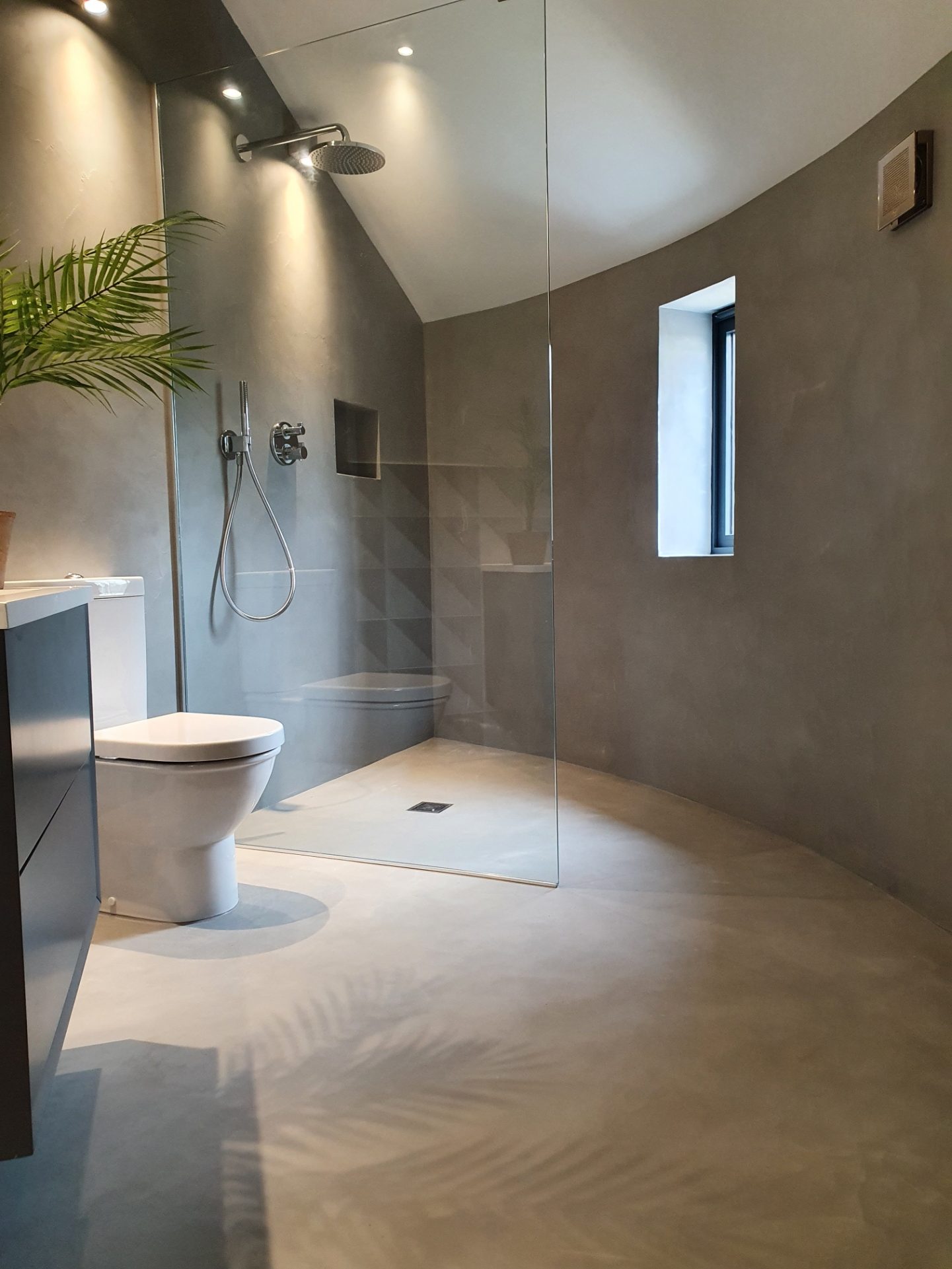
Microcement Bathroom Floors and Walls
Microcement can create a continuous finish across bathroom floors and walls, making it particularly effective for creating a cohesive interior.
In smaller bathrooms, uninterrupted surfaces can help create a greater sense of space, while larger bathrooms can benefit from carrying the same colour and texture throughout.
For bathroom floors, different surface textures can be specified to suit the intended use. In areas exposed to water, slip resistance is particularly important, and the chosen system and finish should provide suitable performance for the space.
Microcement Showers and Wet Rooms
Microcement is suitable for showers and wet rooms when a system specifically designed for wet areas is used.
It is particularly suited to walk-in showers, where the finish can continue across walls and appropriately constructed floors without the visual interruptions created by conventional tile joints.
However, the seamless appearance does not remove the need for careful construction. Shower floors must direct water towards the drain, while corners, junctions and fittings require appropriate waterproof detailing.
Is Microcement Waterproof?
Yes. Microcement can provide a waterproof finish, although this depends on the particular system used.
Some conventional microcement systems rely on protective sealers for waterproofing, meaning the condition of the sealer plays an important role in protecting the surface.
At Lime & Marble, we install specialist Forcrete microcement systems, including resin-hybrid finishes designed to be waterproof before sealing. The sealers provide additional protection against staining and everyday wear, rather than being the sole source of waterproofing.
However, a waterproof surface finish does not replace the need for appropriate substrates, drainage and underlying waterproofing where required.
This is particularly important in showers and wet rooms, where the complete installation must be designed to withstand regular water exposure.
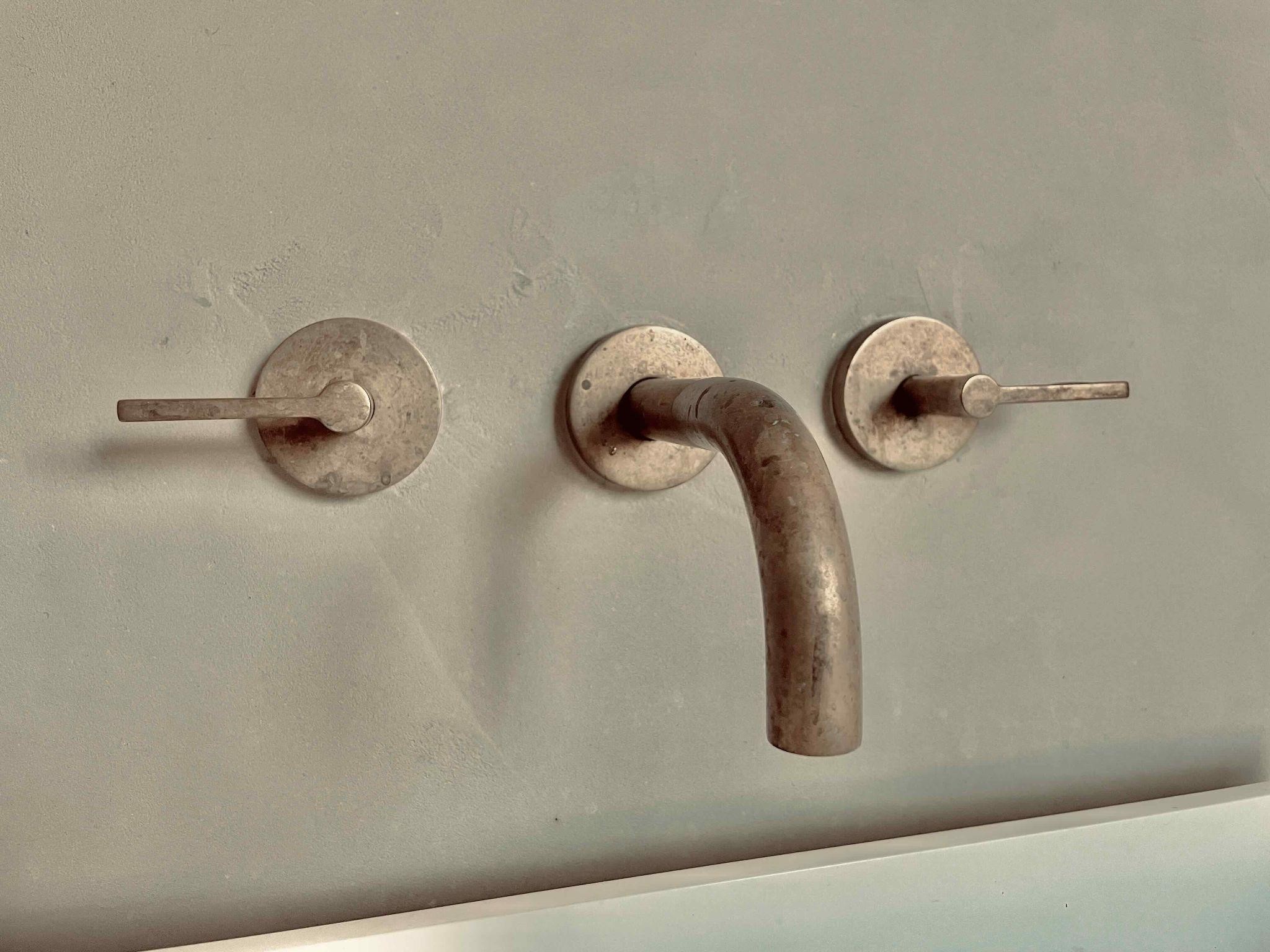
Can Microcement Be Applied Over Existing Bathroom Tiles?
Yes. Microcement can often be applied over existing bathroom tiles, provided they are stable, correctly prepared and suitable for the intended system.
However, the condition of the existing tiles is important. If they are loose or the underlying surface is moving, that movement can transfer through to the microcement and cause cracking.
Existing moisture problems must also be addressed before application. In showers and wet rooms, the condition of the underlying waterproofing requires particular attention.
What Colours and Finishes Are Available for Microcement Bathrooms?
Microcement offers considerable freedom over colour, texture and finish, allowing it to complement a wide variety of bathroom designs.
Although often associated with grey concrete-inspired interiors, popular options also include:
- warm beige, cream and sand tones
- natural stone-inspired colours
- earthy browns and terracotta shades
- pale grey and off-white finishes
- darker charcoal and contemporary tones
Different application techniques can create subtle tonal movement, greater texture or smoother, more polished effects.
Microcement can also share visual similarities with other specialist finishes, including Venetian plaster, although the materials differ in composition, applications and performance.
For homeowners and interior designers, physical samples can help determine how finishes interact with lighting, cabinetry, sanitaryware and other materials. Different colours and textures can also be explored at our Chichester showroom.
How Much Does a Microcement Bathroom Cost?
The cost of a microcement bathroom depends on the size of the area, condition of the existing surfaces, preparation required and complexity of the chosen finish.
Microcement is a specialist hand-applied system, with costs reflecting the materials, multiple application stages and skilled installation involved.
Factors influencing the overall cost include:
- the total surface area
- substrate condition and preparation
- waterproofing requirements
- the chosen colour, texture and finish
- complexity of shower areas and architectural details
Microcement can be comparable in cost to high-quality tiling and, where suitable existing surfaces can be retained, may reduce the overall cost of renovation.
However, the most cost-effective option will depend on the individual project and the level of preparation required.
How Long Does Microcement Last in a Bathroom?
A professionally installed and properly maintained microcement bathroom can last for decades, although the actual lifespan will depend on the system, installation and conditions of use.
Because microcement creates a continuous, hand-applied finish, cracks or repairs can be more noticeable than on surfaces made from individual tiles.
This makes careful substrate preparation important. Movement in the underlying surface, for example, can cause cracks to develop in the microcement above.
In showers and wet areas, using an appropriate waterproof system and maintaining seals around fittings and junctions also contribute to long-term performance.
How Do You Clean and Maintain a Microcement Bathroom?
Microcement is relatively straightforward to clean, particularly because there are no conventional grout lines requiring regular attention.
For everyday care, a soft cloth or mop with water and a suitable pH-neutral cleaner is generally recommended.
To maintain the finish:
- use non-abrasive cleaning materials
- avoid harsh acidic chemicals and unsuitable cleaning products
- remove soap residue and standing water regularly
- check seals around fittings and sanitaryware
In hard-water areas, regular cleaning can also help prevent limescale deposits from building up. Strong acidic limescale removers should be avoided unless specifically approved for the installed system, as they may damage the protective finish.
Specific maintenance requirements will depend on the microcement system and sealer used, so the manufacturer’s and installer’s guidance should always be followed.
Is Microcement Right for Your Bathroom?
Microcement can be an excellent choice for bathrooms where a seamless finish, design flexibility and durability are priorities.
The most suitable system and finish will depend on the existing surfaces, how the bathroom will be used and the overall design you want to achieve.
At Lime & Marble, we work with homeowners, interior designers and architects to explore these considerations and find the right finish for each project.