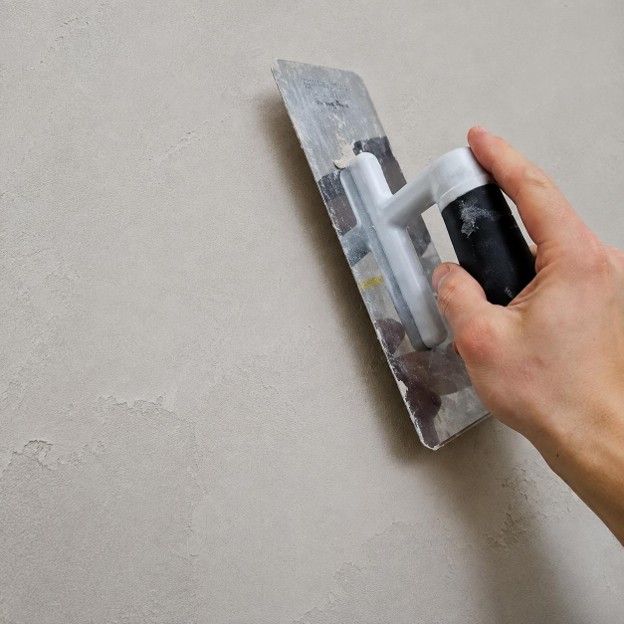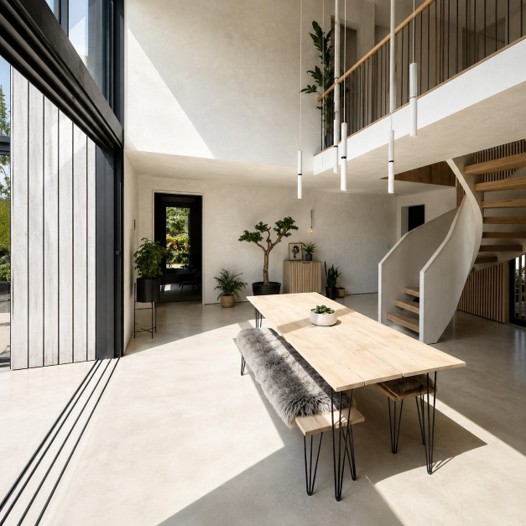

Microcement and Venetian plaster are both specialist, hand-applied finishes that can bring texture, movement and individuality to an interior. Although they share some similarities, they are made from different materials and are suited to different applications.
Microcement is typically chosen for seamless surfaces including floors, walls and wet areas, while Venetian plaster is primarily used decoratively on walls and architectural features.
Neither is inherently better than the other. The most suitable choice depends on where the finish is being used, the performance required from the surface and the overall design you want to achieve.
At Lime & Marble, we install both microcement and Venetian plaster across residential and commercial interiors, including projects for homeowners, interior designers, architects and business owners.
Is Microcement the Same as Venetian Plaster?
No. Microcement and Venetian plaster are distinct surface finishes, although both are applied by hand and offer considerable freedom over colour, texture and finish.
Microcement is a versatile, seamless finish for floors, walls, bathrooms and worktops, while Venetian plaster is primarily used on walls and architectural features to create depth, texture and decorative character.
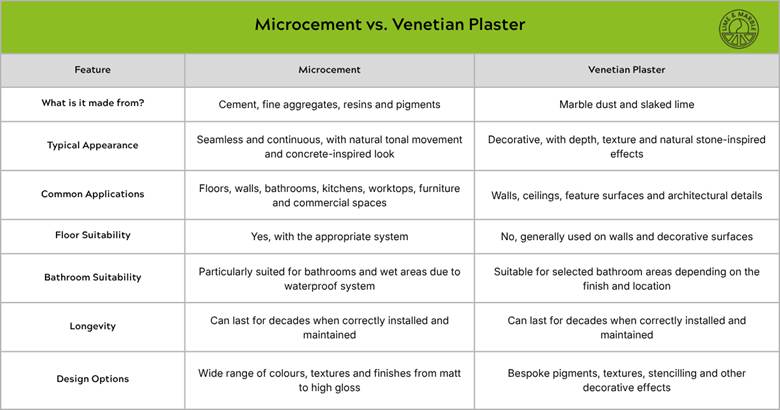
Here is a quick comparison:
What is Microcement?
Microcement is a decorative coating made from cement, fine aggregates, resins and pigments. It is applied in thin layers by hand to create a continuous surface without conventional joints or grout lines associated with materials such as tiles.
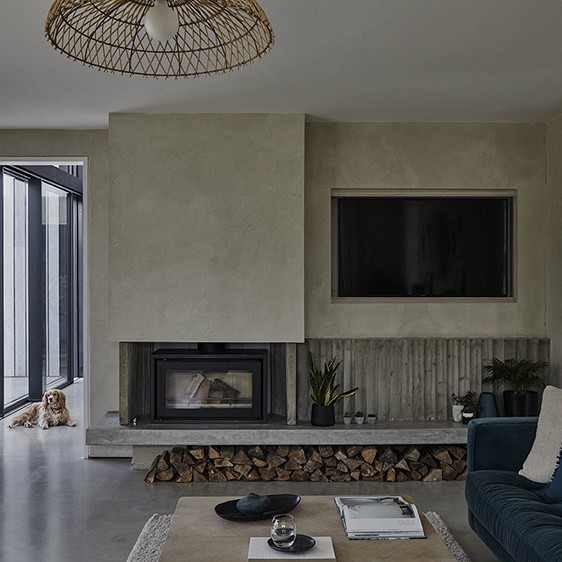
Its versatility is a major part of its appeal. Rather than being restricted to one type of surface, microcement can be used to carry the same material and colour palette across different surfaces and create a seamless flow between spaces.
There is also considerable freedom over its appearance. Although microcement is often associated with stone or concrete-inspired interiors, different colours, textures and finishes can create anything from soft, understated surfaces to more polished modern schemes.
At Lime & Marble, we can tailor the colour, texture and finish – from matt to high-gloss effects – of microcement, to suit the wider interior scheme.
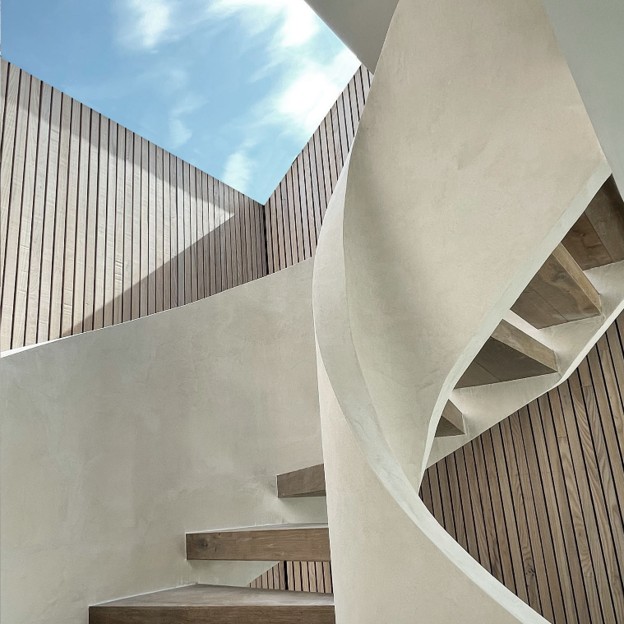
Where Can Microcement Be Used?
Microcement can be used across a wide variety of residential and commercial environments, including:
- floors and walls
- bathrooms, showers and wet areas
- kitchens, worktops and splashbacks
- living spaces
- vanity units and furniture
- outdoor flooring
- architectural features
- residential and commercial interiors
Is Microcement Suitable for Showers and Is It Waterproof?
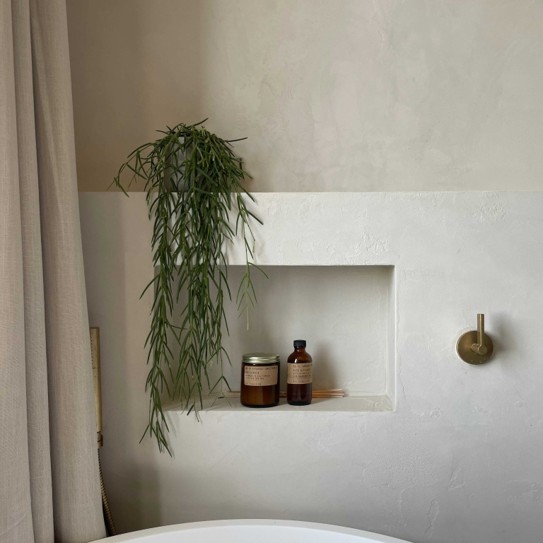
Yes. Microcement can be suitable for showers, bathrooms and other wet areas when a system designed for these conditions is specified.
The Forcrete systems we install include finishes designed for wet areas that are waterproof before sealing, helping to create seamless, grout-free bathroom surfaces.
As with any wet-area finish, the system and build-up need to be matched to the substrate, location and expected use.
What Is the Lifespan of Microcement?
A professionally installed and properly maintained microcement surface can last for decades.
Its actual lifespan will depend on factors such as the substrate, quality of installation, location, amount of traffic and ongoing care.
A decorative wall will naturally experience very different demands from a busy commercial floor, for example, which is why the correct system should always be selected for the intended application.
This is why at Lime & Marble, we assess each project individually, considering the substrate, environment and expected use before recommending the most appropriate microcement system.
Is Microcement Cheaper Than Tiling?
Microcement can be comparable in cost to high-quality tiling and, in some projects, can make the overall renovation more cost-effective.
Microcement can often be applied over suitable existing surfaces, including tiles. Where this is possible, it can reduce the need to remove and dispose of the existing finish before work begins.
There are also no grout lines to clean or maintain once the surface is complete.
However, microcement is a specialist hand-applied system, and the overall cost reflects substrate preparation, multiple layers, specialist materials, sanding, finishing and skilled installation.
What Is Venetian Plaster?
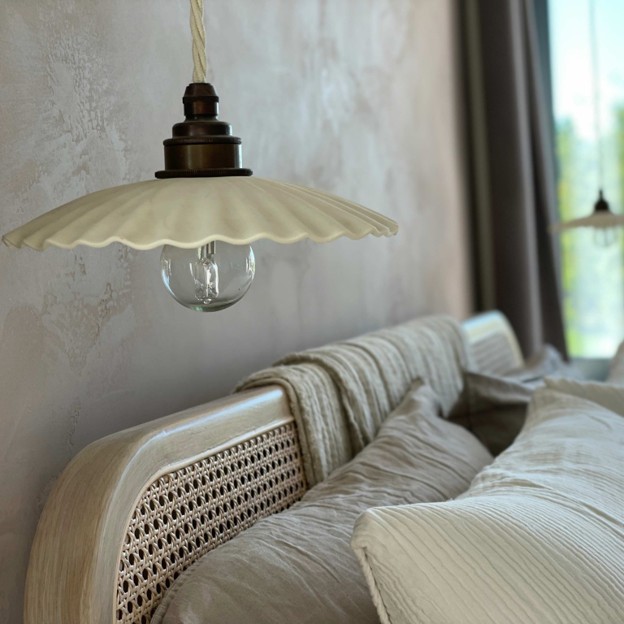
Venetian plaster is a decorative plaster traditionally made using marble dust and slaked lime. It is applied by hand to create surfaces with depth, movement and a distinctive sense of materiality.
Different materials, pigments and application techniques can produce looks inspired by marble, travertine, limestone and other natural stone, as well as more individual textured or polished effects.
The finish can therefore be subtle and understated or much more expressive, depending on the wider interior design.
For interior designers in particular, this gives the wall itself an opportunity to become part of the material palette rather than simply providing a background colour.
At Lime & Marble, we can tailor the colour, texture and decorative detailing – including stencilling – to suit the wider interior scheme.
Where Can Venetian Plaster Be Used?
P: Venetian plaster is particularly suited to walls, ceilings, feature surfaces and architectural details. It can be applied to a variety of suitably prepared surfaces, including:
- walls and ceilings
- over tiles
- cement board
- Brick
- wood
- architectural features such as archways
What Is the Lifespan of Venetian Plaster Walls?
Venetian plaster is a durable, long-lasting decorative finish and can remain attractive for decades when correctly applied and cared for.
Localised areas can also often be repaired where required without necessarily having to refinish an entire room.
Is Venetian Plaster Cheaper Than Tiling?
It can be, particularly in renovation projects where a suitable existing tiled surface can be retained rather than removed.
Venetian plaster can be applied over stable, correctly prepared tiles, potentially reducing the time and costs associated with stripping out and disposing of the existing finish.
Cost will still depend on factors such as the size and condition of the surface, preparation required and the complexity of the chosen finish. A subtle textured finish, for example, has different material and labour requirements from a highly polished or intricate decorative effect.
Do Microcement and Venetian Plaster Look Similar?
Microcement and venetian plaster can share similar colours, seamless application and natural tonal variation, but the finished character of the two materials is different.
Microcement often creates a more continuous, stone or concrete-inspired surface and can carry the same visual language across walls, floors and other areas.
Venetian plaster tends to place more emphasis on the decorative character of the surface itself. Techniques can create finishes influenced by marble, travertine and limestone, or use texture and polish to create something more individual.
How Do You Choose Between Microcement and Venetian Plaster?
The best place to start is with three questions:
Where will the finish be used?
A floor, shower, worktop or busy commercial surface has different requirements from a decorative feature wall.
What does the surface need to do?
Consider water exposure, foot traffic, cleaning, durability and how the area will be used day to day.
How do you want it to look and feel?
Think about colour, texture, movement, sheen and how the finish will interact with the other materials and lighting within the space.
Microcement may be particularly suitable where you want a seamless finish across different surfaces, including floors, walls and wet areas.
Venetian plaster may be particularly suitable where you want walls or architectural features to have greater depth, texture, movement or decorative character.
For interior designers, architects and homeowners, physical samples can make the decision between microcement and venetian plaster much easier. Colour, texture and finish can be viewed alongside timber, stone, cabinetry, metalwork and fabrics to see how each option will work with the other materials in the finished space.
At Lime & Marble’s Chichester showroom, you can see and feel a range of microcement and Venetian plaster finishes, compare samples and discuss the practical and aesthetic requirements of your project with our specialist team.