

Microcement is an increasingly popular choice for homeowners and interior designers looking to create seamless, contemporary surfaces. From bathrooms and wet rooms to kitchen floors and feature walls, its versatility makes it suitable for a wide range of projects.
However, one of the most common questions when considering microcement is how much it costs.
In this guide, we explore typical microcement installation prices in 2026, what affects the cost and what you should consider when comparing quotations.
How Much Does Microcement Cost Per m² in the UK?
Microcement is usually priced per square metre, but costs can vary significantly depending on whether you’re purchasing materials for DIY application or paying for professional installation.
As a general guide, the following prices can help you understand the differences:
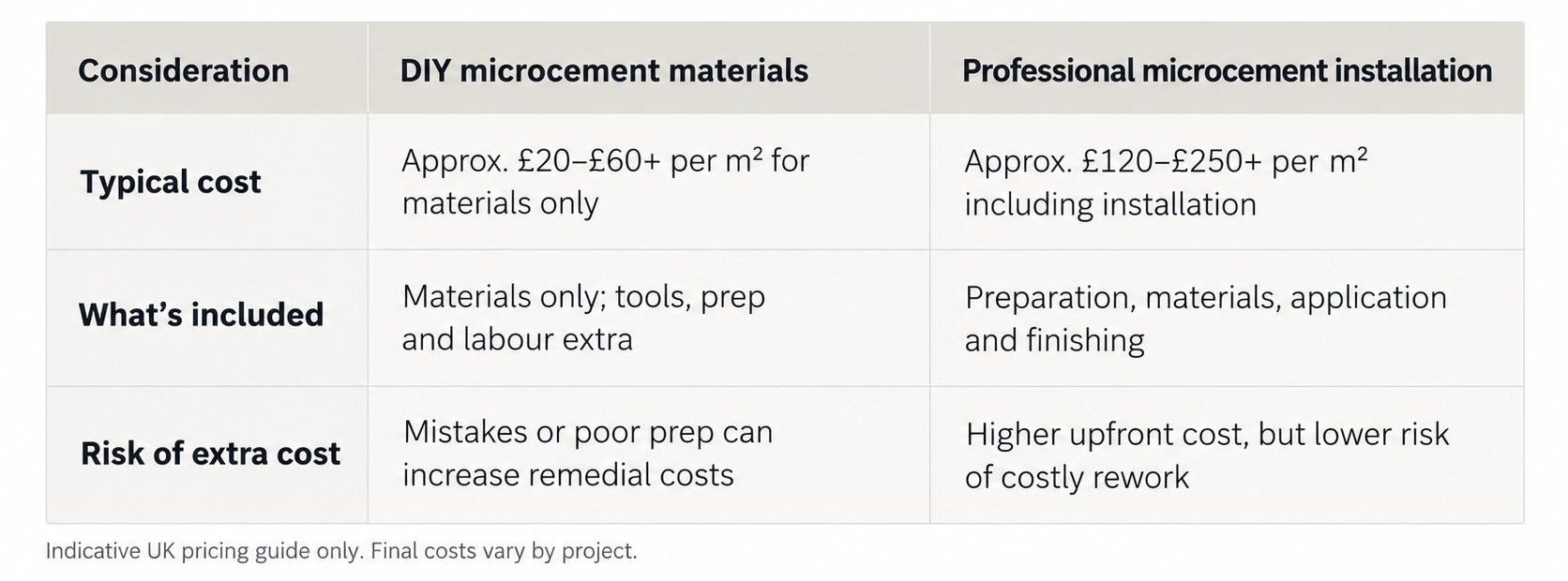
Professional microcement installation in the UK typically costs around £120–£250+ per m², although the final price depends on the size of the area, condition of the existing surface, materials used and complexity of the installation.
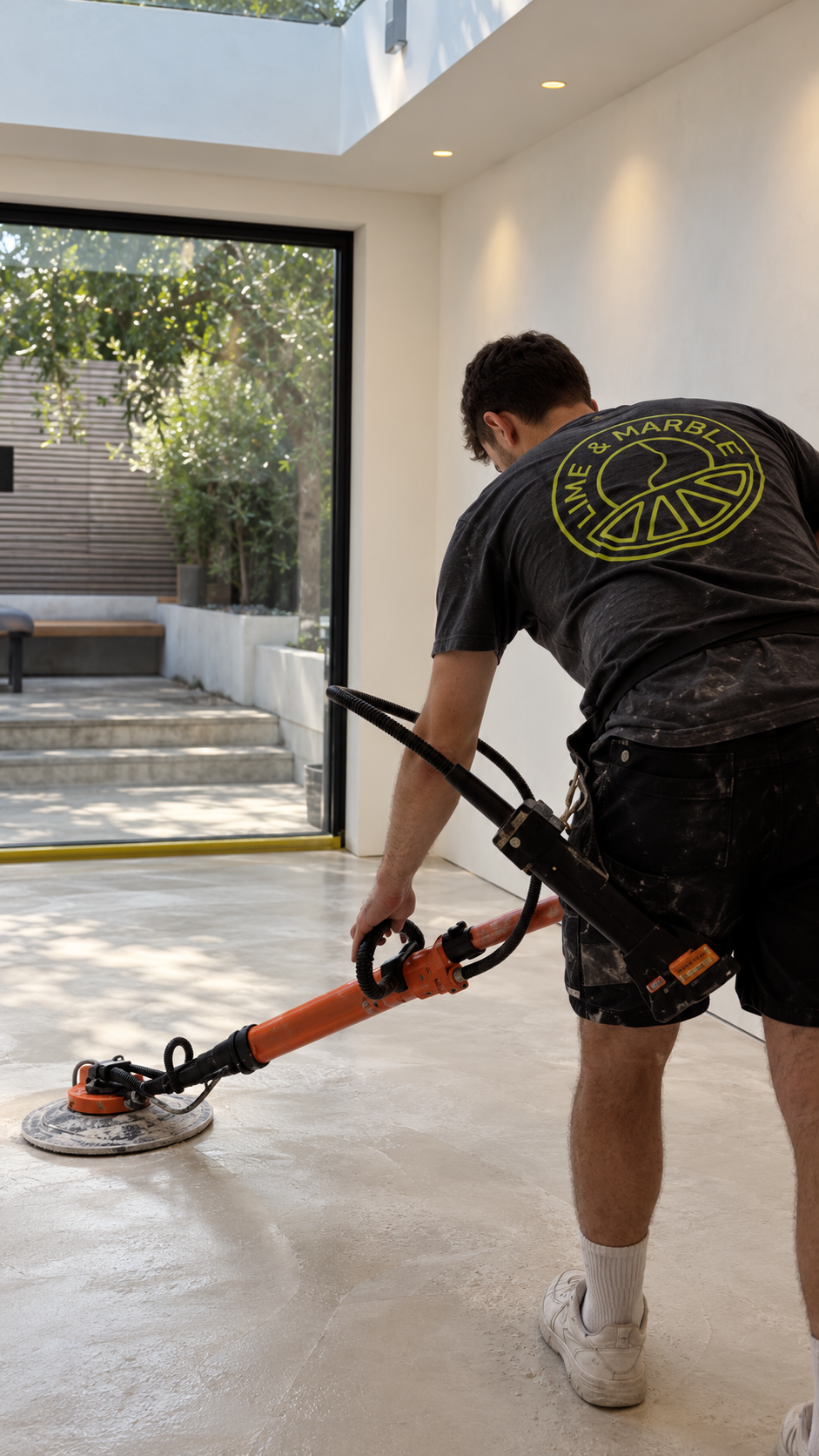
The cost of professional installation includes more than the microcement itself. Surface preparation, specialist materials, multiple application stages and finishing work all contribute to the final price.
It’s also important to understand that smaller installations often cost more per square metre than larger projects. This is because preparation, equipment and application stages are still required, even when the area being covered is relatively small.
How Does Lime & Marble Price Microcement Installation?
At Lime & Marble, our professional microcement installations start from £5,000 + VAT. This typically covers an area of up to 20m², roughly equivalent to the walls and floors of a small bathroom.
For larger projects exceeding 20m², additional surface area is generally charged at £150 per m² + VAT. Our pricing reflects the specialist knowledge, careful preparation and skilled craftsmanship involved in every installation. Each project is assessed individually to ensure the right approach, materials and finishing techniques are used to create a high-quality, bespoke surface designed for lasting performance.
What Affects the Cost of Microcement Installation?
Several factors influence the price of microcement installation, including the size of the area, how the space will be used and the condition of the existing surfaces. Understanding these can help you establish a realistic budget and explain why installation quotations may vary.
Size and Shape of the Area
The total surface area is one of the biggest factors affecting microcement installation costs, but the shape and complexity of the space are also important.
For example:
- Large, open areas: Rectangular floors and uninterrupted surfaces are generally more straightforward to work on, potentially reducing the installation cost per square metre.
- Small or complex spaces: Bathrooms with numerous corners, fixtures, recessed shower niches or intricate edges can require more detailed application work, increasing the cost relative to their size.
Larger projects may also have a lower effective cost per square metre because some preparation and set-up costs are spread across a greater area. As a result, a large living room floor may cost less per square metre to install than a smaller bathroom with multiple surfaces and detailed features.
Room Type and Intended Use
Different rooms have different requirements, which can affect the materials, preparation and protective finishes needed.
For example:
- Bathrooms and wet rooms: Require suitable waterproofing details, careful preparation and finishes designed for regular water exposure.
- Floors: Need a system suitable for the expected level of foot traffic and everyday wear.
- Feature walls: May require less extensive protection than floors or wet areas, depending on the surface condition and location.
- Kitchens: Require finishes suitable for everyday cleaning, spills and the demands of a working kitchen.
As a result, a straightforward feature wall may cost less to install than a similarly sized shower area, where additional preparation, waterproofing details and specialist finishing may be required.
The appropriate microcement system should always be chosen according to where and how it will be used. Explore our Microcement page to learn more about its different applications.
Existing Surface Condition
The condition of the existing surface can significantly influence installation costs because microcement requires a stable, properly prepared foundation.
Before installation, the surface must be assessed to determine whether any repairs or additional preparation are needed. For example:
- Surfaces in good condition: Stable, level surfaces or firmly bonded existing tiles may require less preparation, helping keep installation costs down.
- Damaged or uneven surfaces: Cracks, loose tiles, significant unevenness or moisture problems may need addressing before application, increasing the time and work involved.
Microcement can often be applied over suitable existing tiles, concrete and other solid surfaces, potentially reducing removal and disposal costs.
How Much Does a Microcement Bathroom Cost?
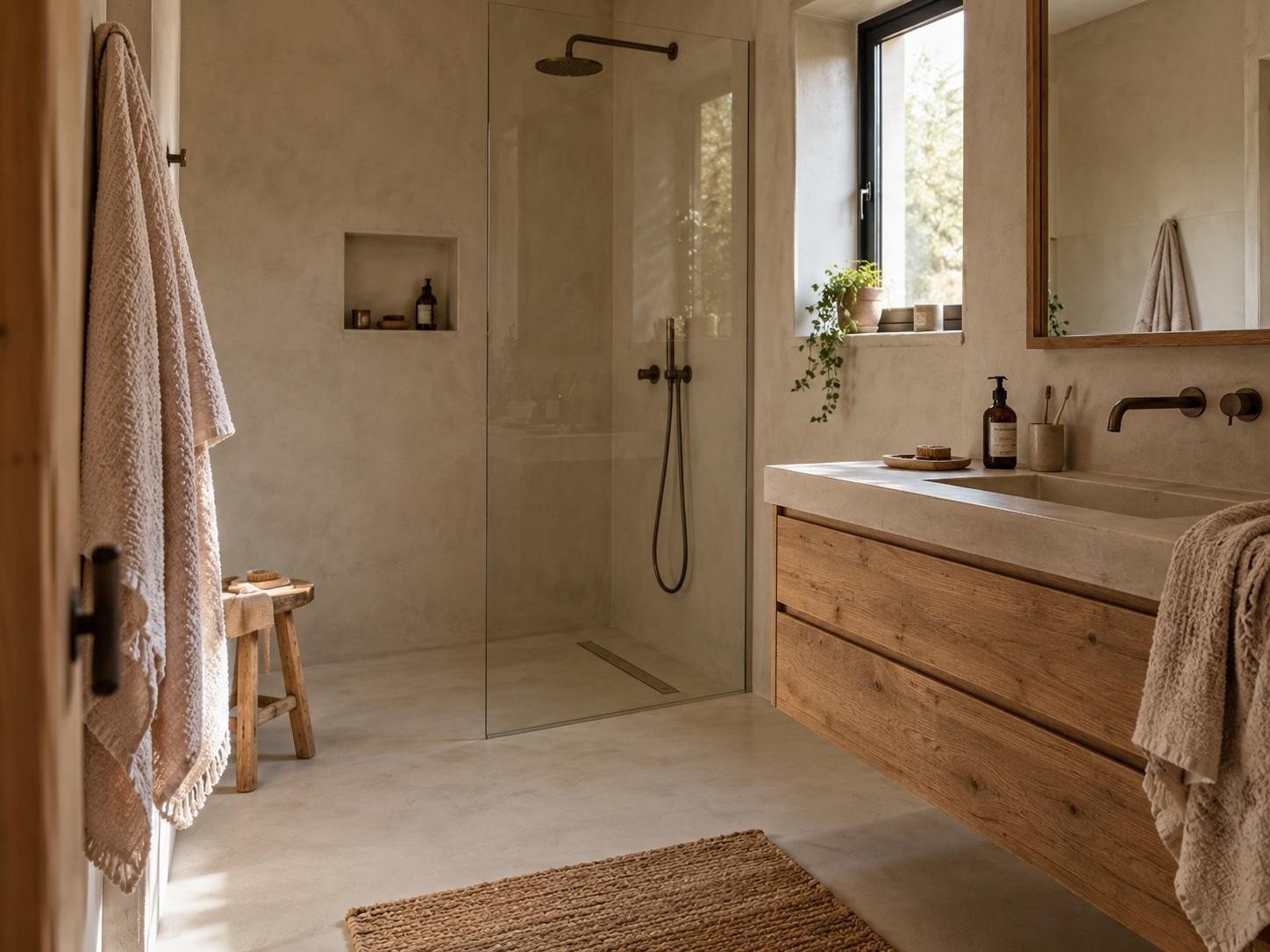
A professionally installed microcement bathroom can cost several thousand pounds, depending on which surfaces are being covered and the extent of the installation.
When budgeting for a microcement bathroom, it’s useful to consider how different applications affect the overall cost:
- Microcement bathroom floors: The cost depends on the floor area and existing surface condition. Smaller bathroom floors can have a relatively high cost per m² because the same preparation and application stages are required.
- Microcement showers and wet rooms: These can cost more per m² than straightforward walls due to waterproofing requirements, drainage details and the additional care needed around niches, corners and fittings.
- Full microcement bathrooms: Covering the walls, floors and shower area involves a greater initial investment, although larger projects may have a lower effective cost per m² than smaller, standalone installations.
It’s also worth distinguishing between the cost of the microcement itself and a complete bathroom renovation. Removing existing fixtures, plumbing alterations and new sanitaryware are generally separate expenses that should be factored into your overall budget.
For more information about the different bathroom applications and finishes, explore our Microcement Bathrooms guide.
Is Microcement Cheaper Than Tiles?
Microcement isn’t necessarily cheaper than tiling. Budget ceramic tiles will generally cost less than microcement, while premium porcelain, natural stone and more complex tiling installations may be comparable in price.
When comparing the two, consider the total installed cost, including materials, surface preparation and labour including specialist installation, rather than just the price per square metre.
For a more detailed comparison of costs, appearance and practical suitability for bathrooms, read our Microcement vs Tiles guide.
What Are You Paying for With Professional Microcement Installation?
Professional microcement installation involves more than the cost of the material itself. The price also reflects the specialist preparation, multi-stage application and skilled workmanship required to create a durable, high-quality finish.
Understanding what’s involved helps explain why professional installation costs can vary and what you’re paying for beyond the finished appearance.
Surface Preparation
Microcement requires a stable, properly prepared surface to achieve good adhesion and a lasting finish.
Before installation, the existing surface is assessed for issues such as cracks, uneven areas, loose tiles or moisture. Depending on its condition, preparation may involve repairs, levelling or applying specialist primers.
Correct preparation helps reduce the risk of cracking, poor adhesion and other problems that could affect the appearance and performance of the finished microcement.
Specialist Application and Finishing
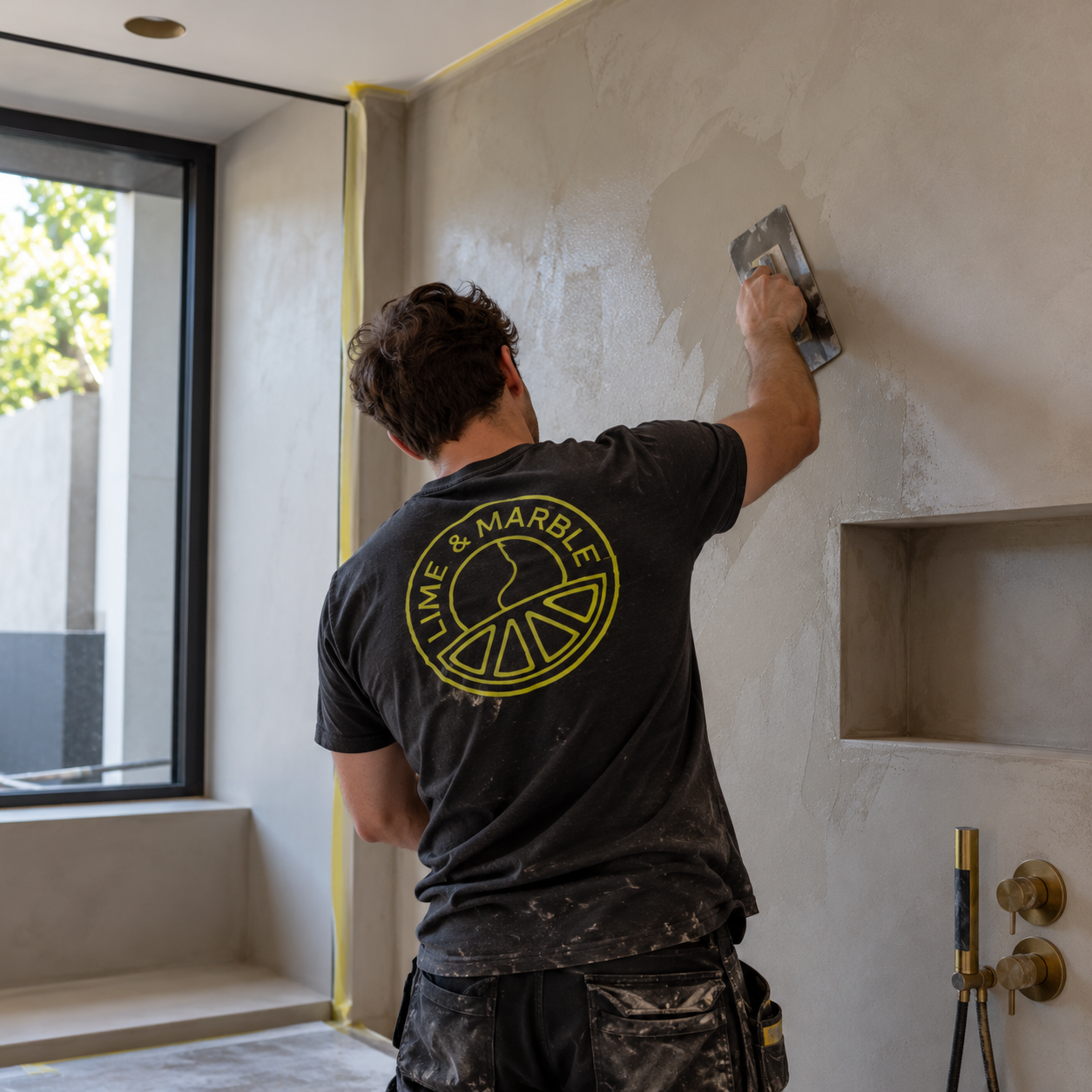
Unlike tiles or other manufactured finishes, microcement is applied by hand in multiple layers, with each stage requiring careful application and appropriate drying or curing time.
The installer’s technique influences the final colour, texture and consistency of the surface, particularly across larger areas or around intricate details such as corners, edges and recessed features.
Skilled application is essential to achieving microcement’s seamless appearance, creating a cohesive finish across walls, floors and architectural features without conventional grout lines.
Waterproofing and Protection
Waterproofing is particularly important in bathrooms, showers and wet rooms, where surfaces are regularly exposed to moisture.
Not all microcement systems provide the same level of water protection. Some rely on surface sealers for waterproofing, whereas others incorporate waterproof properties into the material itself.
At Lime & Marble, we use Forcrete microcement, a specialist system designed to be 100% waterproof before protective sealers are applied. This means waterproofing is built into the microcement layers, while sealers provide additional protection against staining and everyday wear.
Combined with correct surface preparation and detailing around joints, drainage and fittings, this helps create a durable, reliable finish suited to wet environments.
What Should You Look for When Comparing Microcement Installation Quotes?
Microcement installation quotations can vary considerably, but the cheapest price doesn’t always represent the same work or specification.
Before comparing costs, it’s important to establish exactly what’s included.
Consider the following questions:
- Is surface preparation included? Check whether repairs, levelling or preparation of existing tiles are covered.
- Which microcement system will be used? Different materials have different properties, so the proposed system should be suitable for the intended surface.
- Does the price include waterproofing and sealing? This is particularly important for bathrooms, showers and wet rooms.
- Are complex areas included? Niches, stairs, curved surfaces and detailed edges may require additional work.
- What experience does the installer have? Previous examples of similar projects can help demonstrate their ability to achieve your desired finish.
A detailed quotation should make it clear what work is involved, which areas are being covered and what preparation or additional work may be required.
This makes it easier to compare installers fairly and avoid unexpected costs once the project begins.
Planning a Microcement Project?
Understanding the costs involved is an important part of planning a microcement installation. From the condition of the existing surfaces to the finish you want to achieve, each element contributes to the overall project requirements.
At Lime & Marble, we specialise in bespoke microcement finishes for residential and commercial interiors, combining traditional craftsmanship with contemporary materials and application techniques.