

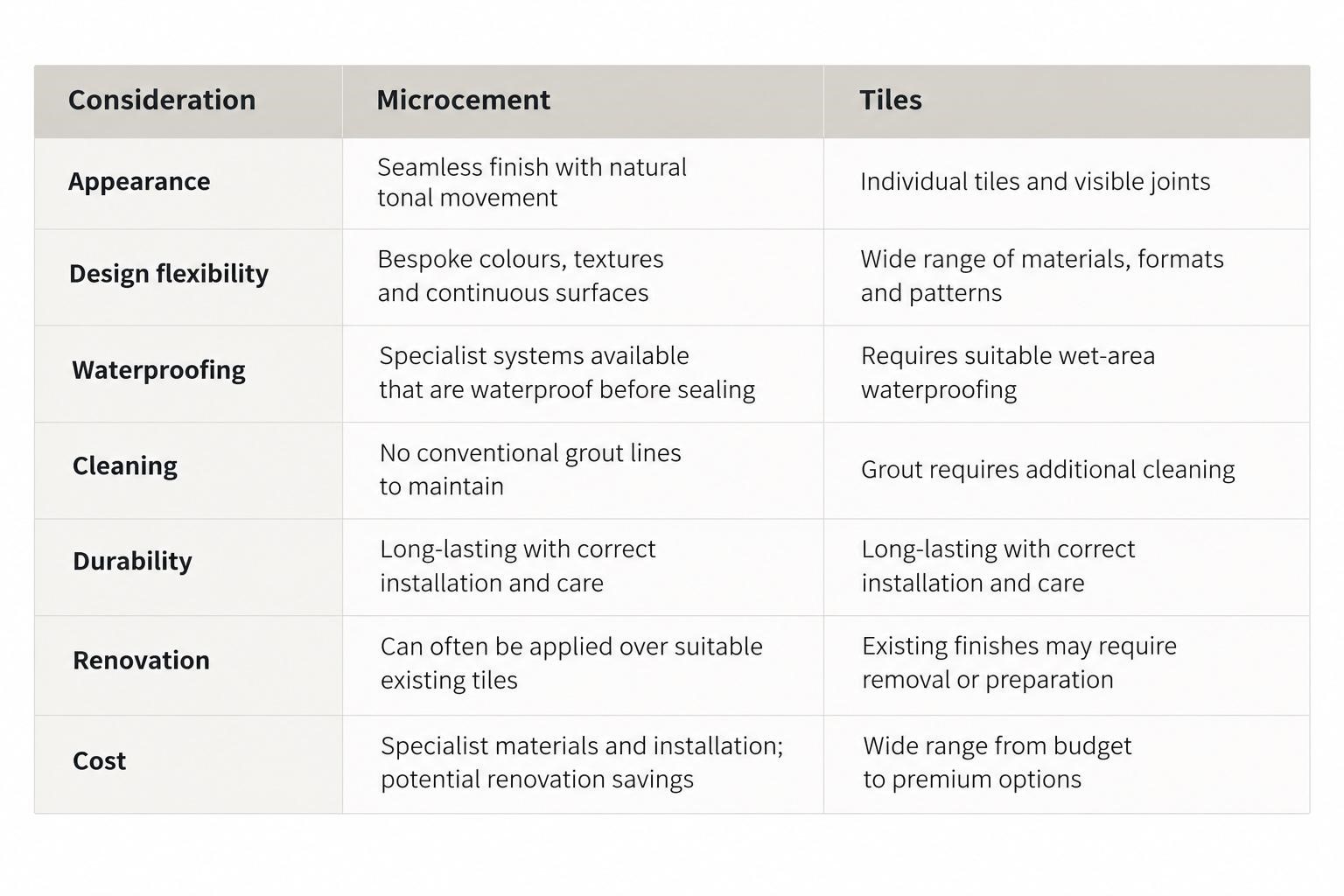
Microcement and tiles are both popular bathroom finishes, but they offer different advantages in terms of appearance, maintenance, installation and cost.
Microcement is particularly suited to bathrooms where a seamless appearance, bespoke finishes and fewer grout lines are priorities. Tiles offer greater variety in individual patterns and formats, often with a lower initial material cost.
The better option ultimately depends on the design, budget and practical requirements of the space, although microcement offers distinctive advantages for those looking to create a more continuous, cohesive interior.
At Lime & Marble, we specialise in microcement finishes for residential and commercial interiors, working with homeowners, interior designers and architects to create surfaces tailored to individual projects.
Microcement vs Tiles: What Are the Main Differences?
The main difference between microcement and tiles is how the finished surface is created.
Microcement is applied by hand in thin layers, producing a continuous finish with natural tonal variation and no conventional grout lines. Tiles are individual units, typically made from ceramic, porcelain or natural stone, installed with grouted joints.
Both can create attractive, long-lasting bathrooms, but their characteristics offer different benefits.
Which Offers More Design Flexibility?
Both materials offer design flexibility, although microcement provides greater freedom to create a continuous finish across different bathroom surfaces, while tiles provide variety through different patterns, materials and formats.
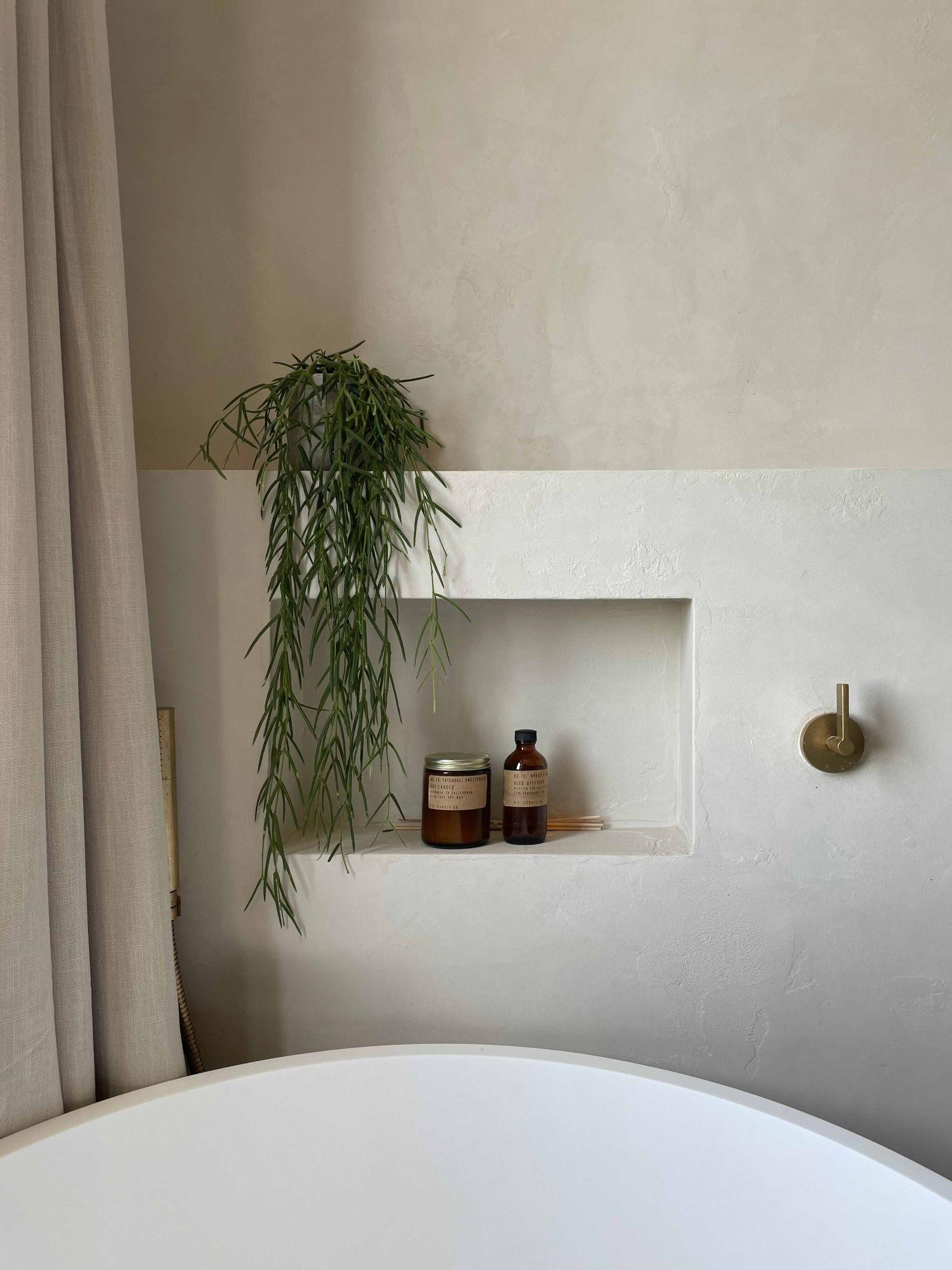
Unlike tiles, microcement can continue across walls, floors, shower areas and architectural features without conventional grout lines interrupting the design.
This can be particularly effective in smaller bathrooms, where uninterrupted surfaces help create a greater sense of space, or larger interiors where a consistent material palette is important.
As a hand-applied finish, microcement also offers natural tonal variation and movement, with colours and textures tailored to complement surrounding materials.
When choosing a microcement finish, colour is only part of the decision. The level of texture, movement and sheen can significantly influence how the material looks under bathroom lighting and alongside cabinetry, sanitaryware and other finishes.
Tiles provide considerable decorative variety through different formats, patterns and materials, but their individual shapes and joints remain part of the finished appearance.
For those looking to create a more seamless, understated bathroom, microcement offers a level of visual continuity that conventional tiling cannot fully replicate.
Is Microcement More Waterproof Than Tiles?
Both microcement and tiles can be suitable for bathrooms, showers and wet rooms, although waterproofing performance depends on the complete installation rather than the decorative finish alone.
Porcelain tiles generally absorb very little water, but grout joints and the tiled finish itself should not be relied upon to waterproof a shower. Appropriate waterproofing beneath the tiles and careful detailing around drains and junctions remain essential.
Microcement systems vary, with some relying on protective sealers for waterproofing.
At Lime & Marble, we install specialist Forcrete microcement systems, including resin-hybrid finishes designed to be waterproof before sealing.
This means the coating itself provides waterproofing, while the sealer offers additional protection against staining and everyday wear.
However, the complete shower or wet-room construction must still incorporate suitable substrates, drainage and waterproof detailing where required.
With an appropriately specified system, microcement combines a continuous decorative finish with waterproofing performance suitable for demanding bathroom environments.
Which Is Easier to Clean and Maintain?
Microcement can be easier to clean than traditional bathroom tiles because it has no conventional grout lines where dirt, soap residue, limescale and mold can commonly accumulate.
In tiled bathrooms, grout joints can require additional cleaning and maintenance, particularly around showers and other frequently wet areas.
Microcement creates a continuous surface without these conventional joints, making routine cleaning more straightforward.
A soft cloth or mop with water and a suitable pH-neutral cleaner is generally recommended for everyday care. However, cleaning products must be compatible with the installed system, as harsh chemicals or abrasive materials may damage certain protective finishes.
Tiles can also be easy to clean, particularly smooth glazed porcelain, but maintaining grout remains an additional consideration.
For bathrooms where ease of cleaning and fewer visible joints are priorities, microcement offers a meaningful practical benefit alongside its seamless appearance.
Which Is More Durable: Microcement or Tiles?
Both microcement and tiles can provide durable, long-lasting bathroom surfaces when correctly installed and maintained.
Professionally installed microcement can last for decades, with its performance depending on the system used, substrate preparation and ongoing care.
Because microcement creates a continuous finish, the stability of the underlying surface is particularly important. Any existing movement or cracks must be addressed before application to help prevent problems developing in the finished surface.
Porcelain tiles are also highly resistant to everyday wear, although individual tiles can chip or crack following impact or movement beneath the surface. Grout joints may also require attention over time.
Repairs differ between the materials. Individual tiles can sometimes be replaced, while localised repairs to microcement may be more noticeable due to its hand-applied texture and tonal variation.
Neither finish is immune to damage, but a correctly specified microcement system can provide a long-lasting bathroom surface without conventional grout lines.
Is Microcement Cheaper Than Tiles?
Microcement is not necessarily cheaper than tiles, although comparing material prices alone does not reflect the total cost of a bathroom renovation.
Basic ceramic tiles are often a more affordable starting point, while premium porcelain, natural stone and intricate tile layouts can involve substantially higher material and installation costs.
Microcement is a specialist hand-applied finish, with costs reflecting surface preparation, multiple application stages and skilled installation.
However, microcement can often be applied over suitable existing tiles, potentially reducing the need for removal, disposal and associated renovation work.
The existing surface must be stable and correctly prepared, with any cracks, movement or moisture problems addressed beforehand.
Where suitable existing finishes can be retained, microcement may offer better overall value than initially expected.
The most useful comparison is therefore the total cost of each completed installation, rather than the price of the materials alone.
Which Is Better for Your Bathroom: Microcement or Tiles?
Both microcement and tiles can create attractive, durable bathroom finishes. Tiles offer extensive choice in materials, patterns and price points, while microcement provides a seamless, bespoke finish with fewer grout lines to maintain.
For those prioritising design flexibility, visual continuity and ease of maintenance, microcement can offer distinct advantages, particularly when creating a cohesive finish across bathroom walls, floors and showers.
At Lime & Marble, we specialise in creating bespoke microcement finishes tailored to individual projects. Visit our Chichester showroom to explore colours, textures and finishes, or contact our team to discuss your bathroom project.